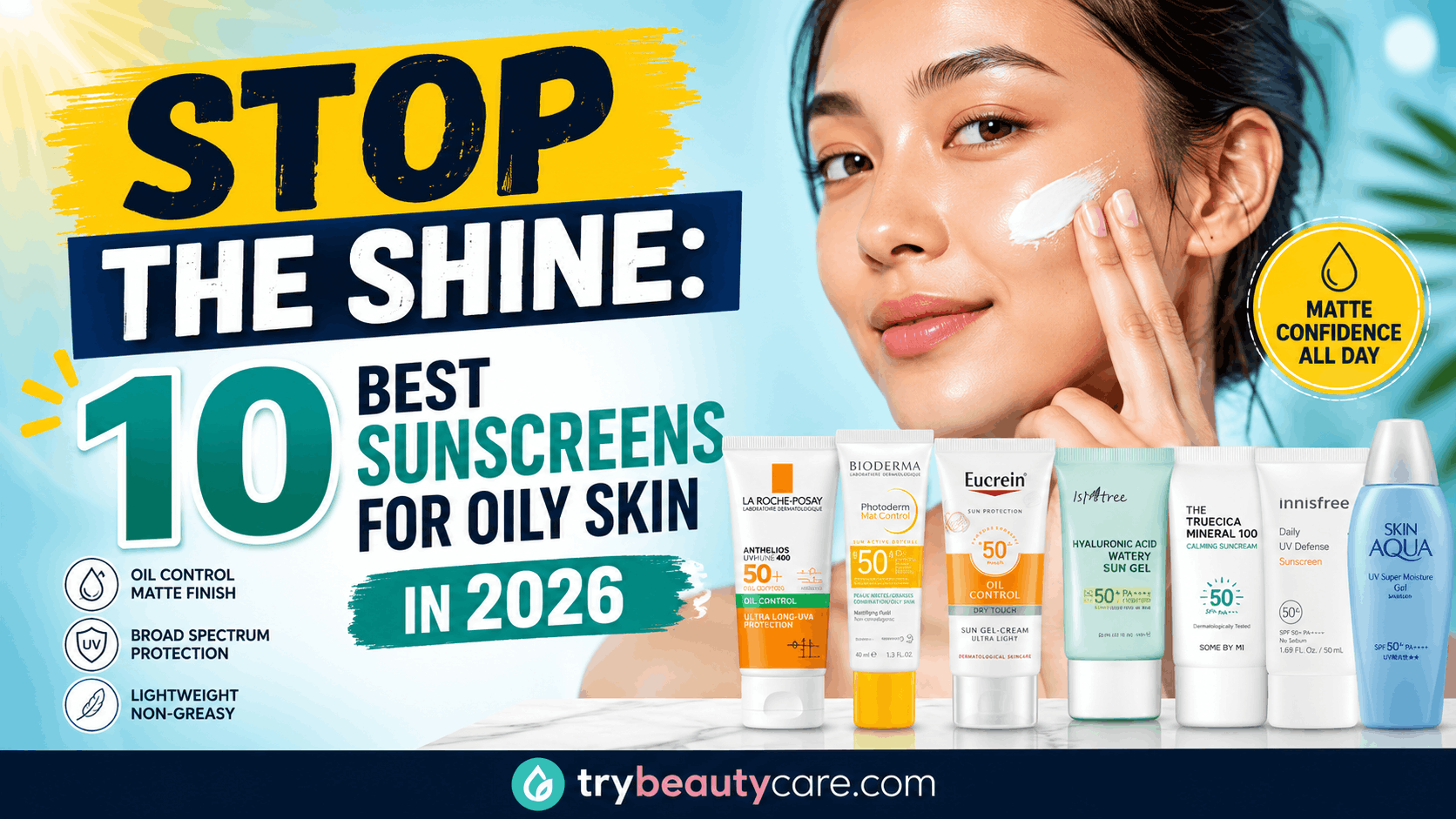
Best Sunscreens for Oily Skin: If you have oily skin, sunscreen can sometimes feel frustrating. You apply it in the morning expecting protection, but after a few hours your face starts looking shiny, greasy, or heavy. Some products can make the skin feel sticky, while others may seem thick under makeup.
Because of this, many people with oily skin skip sunscreen completely. Unfortunately, avoiding sunscreen can become a mistake because daily sun exposure affects the skin even when you are indoors or driving.
The good news is that sunscreen formulas have improved a lot in recent years.
In 2026, many products are designed specifically for oily skin and focus on lightweight textures that feel comfortable during everyday wear.
In this guide you will learn:
- Why sunscreen matters for oily skin
- How to choose non-greasy formulas
- Ingredients that work well for oily skin
- Common mistakes to avoid
- Best sunscreen products for oily skin
- Frequently asked questions
10 Best Sunscreen for Oily Skin That Doesn’t Feel Greasy in 2026
Finding sunscreen for oily skin can sometimes feel harder than finding a moisturizer or cleanser. Many people avoid sunscreen because they worry about shine, clogged pores, sticky texture, or that heavy feeling sitting on the skin all day.
The good news is that sunscreen technology has improved significantly. In 2026, many formulas are designed specifically for oily skin with lightweight textures, quick absorption, and comfortable finishes.
The right sunscreen should protect your skin while feeling almost invisible.
1. Lightweight Gel Sunscreen SPF 50
Best for:
- Oily skin
- Summer weather
- Daily use
Why people like it:
Gel-based sunscreens usually absorb quickly and feel lighter than traditional cream formulas. They often leave less residue and can feel refreshing on the skin.
Benefits:
- Lightweight texture
- Fast absorption
- Comfortable daily wear
- Less heavy feeling
Possible downside:
Some gel formulas may not provide enough moisture for people with dry areas.
2. Matte Finish Oil-Free Sunscreen
Best for:
- Very oily skin
- Shine control
Why people like it:
People with oily skin often struggle with midday shine. Matte sunscreens are designed to reduce that overly shiny appearance.
Benefits:
- Oil control
- Matte appearance
- Comfortable under makeup
Possible downside:
Some matte products may feel slightly drying for combination skin.
3. Water-Based Sunscreen Formula
Best for:
- Sensitive skin
- Combination skin
Why people like it:
Water-based products typically feel lighter than heavier cream-based products.
Benefits:
- Lightweight feel
- Quick absorption
- Fresh skin feeling
Possible downside:
May require reapplication during long outdoor activities.
4. Serum Sunscreen SPF Formula
Best for:
- Skincare enthusiasts
- Lightweight routines
Why people like it:
Serum-style sunscreen combines skincare texture with sun protection.
Benefits:
- Thin consistency
- Easy layering
- Lightweight feeling
Possible downside:
May not feel moisturizing enough for very dry skin.
5. Invisible Finish Sunscreen
Best for:
- Makeup users
- Daily office wear
Why people like it:
Some sunscreen products leave a visible layer on the skin. Invisible formulas aim to reduce that issue.
Benefits:
- No heavy appearance
- Smooth finish
- Makeup-friendly
6. Mineral Lightweight Sunscreen
Best for:
- Sensitive skin
- Skin comfort
Benefits:
- Gentle formula
- Daily use support
- Lightweight texture
Possible downside:
Some mineral products may leave a slight visible layer depending on skin tone.
7. Hybrid Sunscreen Formula
Best for:
- Combination skin
- Everyday routines
Benefits:
- Balanced texture
- Comfortable finish
- Versatile use
8. Sweat-Resistant Sunscreen
Best for:
- Outdoor activities
- Gym users
- Summer weather
Benefits:
- Better wear during heat
- Comfortable protection
9. Acne-Friendly Non-Comedogenic Sunscreen
Best for:
- Acne-prone skin
- Oily skin
Benefits:
- Designed not to easily clog pores
- Lightweight texture
- Everyday use
10. Daily Wear Ultra-Light Sunscreen
Best for:
- Beginners
- Minimal skincare routines
Benefits:
- Easy application
- Comfortable wear
- Lightweight finish
Common Mistakes People With Oily Skin Make
Even good sunscreen can feel ineffective if used incorrectly.
Avoid these mistakes:
- Skipping sunscreen completely
- Applying too little product
- Choosing heavy cream formulas
- Forgetting reapplication
- Using expired sunscreen
- Ignoring ingredient labels
Best Daily Routine for Oily Skin
Morning routine:
- Gentle cleanser
- Lightweight serum
- Oil-free moisturizer
- Sunscreen SPF 30–50
Night routine:
- Cleanser
- Treatment serum
- Lightweight moisturizer
Keeping routines simple often works better than using too many products.
Why Oily Skin Still Needs Sunscreen
Many people with oily skin believe sunscreen is only necessary for people with dry or sensitive skin. Others think that because their skin naturally produces more oil, it already has some type of protection. This is one of the most common skincare misunderstandings.
Oily skin and protected skin are not the same thing.
Your skin faces environmental exposure every day, whether you spend time outside, drive to work, sit near windows, or simply walk outdoors for a few minutes.
Daily exposure can include:
- Sunlight
- Heat
- Pollution
- Dust
- Environmental stress
- Weather changes
Over time, these outside factors may affect how your skin looks and feels.
Many people skip sunscreen because they worry about:
- Greasy texture
- Heavy feeling on the face
- Extra shine
- Clogged pores
- Breakout concerns
Older sunscreen formulas sometimes created these problems, which caused many people with oily skin to avoid daily use.
Fortunately, sunscreen products in 2026 have improved significantly.
Modern formulations often include:
- Lightweight textures
- Gel formulas
- Water-based ingredients
- Matte finishes
- Oil-free options
- Fast-absorbing technology
These products are designed to feel much more comfortable on oily skin.

Sun Exposure Can Affect Oily Skin Too
Some people assume only dry skin becomes damaged from daily environmental exposure.
However, oily skin can also experience concerns such as:
- Uneven-looking skin appearance
- Excess shine
- Skin discomfort after heat exposure
- Dull-looking skin
- Skin stress from outdoor conditions
This is why many skincare routines include sunscreen as a daily step regardless of skin type.
Sunscreen Can Work Well in Oily Skin Routines
People often imagine sunscreen as a thick final layer sitting heavily on the face.
Modern sunscreen can fit easily into routines like:
Morning skincare routine:
- Gentle cleanser
- Lightweight serum
- Oil-free moisturizer
- Sunscreen
The goal is finding a formula that feels comfortable enough to wear consistently.
Consistency Matters More Than Perfection
Applying sunscreen once in a while usually does not create a complete routine.
Healthy-looking skin habits are often built through daily actions like:
- Washing your face gently
- Staying hydrated
- Following a simple routine
- Wearing sunscreen consistently
Why Some Sunscreens Feel Heavy on Oily Skin
If you have oily skin, you have probably experienced this before: you apply sunscreen in the morning, and within a few hours your face starts feeling shiny, sticky, or uncomfortable. Instead of feeling protected, your skin may feel like it has an extra layer sitting on top of it.
This is one of the biggest reasons many people with oily skin avoid sunscreen completely.
The truth is that not all sunscreens are designed the same way.
Older sunscreen formulas were often created with richer textures that focused mainly on protection but paid less attention to comfort and skin type differences. While these products worked for some people, individuals with oily skin often found them too heavy for everyday use.
Common complaints include:
- Greasy feeling
- Thick texture
- Excess shine
- Sticky skin
- Makeup sliding off
- Heavy layers on the face
Thick Cream-Based Formulas
One major reason sunscreen can feel heavy is texture.
Some traditional sunscreens use thicker cream formulations that create a stronger layer on the skin surface.
These products may feel:
- Dense
- Rich
- Slow to absorb
- Heavy throughout the day
People with naturally oily skin often already produce excess oil. Adding a heavy product on top can sometimes make the face feel even more uncomfortable.
Too Many Moisturizing Ingredients
Hydration is important for healthy skin, but some sunscreen products contain very rich moisturizing ingredients.
For example:
- Heavy oils
- Thick creams
- Rich emollients
- Dense moisturizing agents
While these ingredients may feel comfortable on dry skin, people with oily skin sometimes prefer lighter formulations.
Multiple Skincare Layers Can Add Weight
Sometimes sunscreen itself is not the only reason your face feels heavy.
Morning routines may include:
- Cleanser
- Toner
- Serum
- Moisturizer
- Sunscreen
- Makeup products
When several products are layered together, the skin may begin feeling overloaded.
Even lightweight products can feel heavier when multiple layers build up throughout the day.
Hot Weather Can Make It Feel Worse
Temperature can also affect how sunscreen feels.
During hot weather:
- Skin may produce more oil
- Sweat increases
- Humidity rises
- Shine becomes more noticeable
A sunscreen that feels comfortable in cool weather may feel heavier during summer months.
This is why many people with oily skin switch to lighter formulas during warmer seasons.
Modern Sunscreens Feel Different
Fortunately, sunscreen formulas have improved significantly.
Many products in 2026 are designed specifically for oily skin and often include:
- Gel textures
- Water-based formulas
- Oil-free ingredients
- Matte finishes
- Lightweight technology
- Fast absorption formulas
These products aim to provide protection without creating that heavy or greasy feeling.
What to Look for in the Best Sunscreen for Oily Skin
Walking into a skincare store or searching online can quickly become confusing because there are hundreds of sunscreen options available. Some products claim to be lightweight, others promise oil control, and many advertise special skincare benefits.
For people with oily skin, choosing the wrong sunscreen can sometimes lead to an uncomfortable feeling throughout the day. Instead of protecting your skin comfortably, the product may leave your face looking shiny or feeling heavy.
Understanding what to look for can make choosing the right sunscreen much easier.
Oil-Free Formulas
One of the first things many people with oily skin check is whether the sunscreen is labeled as oil-free.
Oil-free products are often designed to feel lighter and less greasy compared to richer formulas.
Benefits may include:
- Lightweight feeling
- Reduced shine appearance
- Better comfort
- Easier daily wear
This does not automatically mean every oil-free sunscreen works perfectly for everyone, but many people with oily skin prefer this type of formula.
Non-Comedogenic Products
You may notice the term “non-comedogenic” written on sunscreen packaging.
This generally means the product is designed to avoid easily clogging pores.
People commonly choose non-comedogenic formulas if they have:
- Oily skin
- Acne-prone skin
- Combination skin
- Breakout concerns
Lightweight products often feel more comfortable when pores do not feel overloaded.
Lightweight Texture
Texture matters a lot.
Even good sunscreen protection can feel unpleasant if the formula feels thick on your face.
People with oily skin often prefer:
- Gel sunscreen
- Water-based sunscreen
- Fluid sunscreen
- Serum sunscreen
These textures usually absorb faster than heavier cream formulas.
Matte Finish
Some sunscreen products leave extra shine after application.
For oily skin, matte formulas can help create a more balanced appearance.
Benefits of matte sunscreen may include:
- Reduced shiny appearance
- Better comfort
- Improved makeup application
- Less oily-looking skin
Many people especially prefer matte sunscreen during hot weather.
Broad Spectrum Protection
Broad spectrum sunscreen means the product is designed to provide wider sun protection coverage.
Many people choose:
- SPF 30
- SPF 50
- Higher SPF options
Daily protection often becomes part of a complete skincare routine.
Sweat and Humidity Resistance
If you live in a hot climate or spend time outdoors, sweat-resistant formulas can feel more comfortable.
These formulas may help during:
- Summer weather
- Outdoor activities
- Gym sessions
- Travel
- Long workdays
Ingredients That Support Oily Skin
Modern sunscreen products sometimes include additional skincare ingredients.
Examples include:
- Niacinamide
- Hyaluronic acid
- Ceramides
- Antioxidants
These ingredients may help improve the overall skincare experience while keeping routines simple.
Frequently Asked Questions (FAQs)
1. Which sunscreen is best for oily skin in 2026?
The best sunscreen for oily skin is usually a lightweight, non-greasy formula that feels comfortable throughout the day. Many people prefer oil-free, gel-based, matte-finish, or water-based sunscreen products.
2. Can sunscreen make oily skin more greasy?
Some heavy formulas may feel greasy on oily skin. However, many modern sunscreen products are designed specifically for oily skin and use lightweight textures that absorb quickly.
3. Is SPF 30 enough for oily skin?
SPF 30 is commonly used for daily wear. Some people prefer SPF 50 for additional protection depending on lifestyle, outdoor activity, and personal preference.
4. Can I use sunscreen if I have acne-prone oily skin?
Yes. Many people with acne-prone oily skin choose non-comedogenic sunscreen formulas because they are designed to avoid easily clogging pores.
5. Should I apply moisturizer before sunscreen on oily skin?
Yes. A simple routine often includes:
- Cleanser
- Serum (optional)
- Lightweight moisturizer
- Sunscreen
People with oily skin often choose lightweight or oil-free moisturizers.
6. Can I skip sunscreen on cloudy days?
Many people think sunscreen is only necessary on sunny days, but daily environmental exposure still occurs even when the weather appears cloudy.
7. How often should sunscreen be reapplied?
Reapplication needs vary depending on activity, outdoor exposure, sweating, and time spent outside.
8. What type of sunscreen texture works best for oily skin?
Many people with oily skin prefer:
- Gel sunscreen
- Water-based sunscreen
- Fluid sunscreen
- Matte sunscreen
- Lightweight serum sunscreen
These formulas often feel more comfortable than heavier creams.
9. Can sunscreen be used under makeup?
Yes. Many modern sunscreen products are designed to work comfortably under makeup and daily skincare routines.
10. Why does my face become shiny after sunscreen?
Shiny skin may happen because of heavy ingredients, rich textures, excess oil production, hot weather, or layering multiple skincare products together.
Final Thoughts
Finding the best sunscreen for oily skin does not have to feel complicated. In the past, many people avoided sunscreen because products often felt thick, greasy, or uncomfortable. Fortunately, modern skincare has changed significantly, and many sunscreen formulas in 2026 are designed specifically for oily skin needs.
The right sunscreen should do more than simply provide protection. It should feel lightweight, absorb comfortably, and fit naturally into your everyday routine without making your face look overly shiny.
Remember that skincare is rarely about finding one perfect product overnight. Healthy-looking skin usually comes from consistent daily habits such as:
- Following a simple routine
- Staying hydrated
- Using products that match your skin type
- Protecting your skin every day
Even the most expensive skincare routine cannot replace daily sun protection.
The Best Sunscreens for Oily Skin is ultimately the one you enjoy using consistently. When a product feels comfortable enough to wear every day, protecting your skin becomes much easier and turns into a long-term habit rather than a chore.
Your skin does not need heavy products to stay healthy. Sometimes lightweight protection and simple routines create the biggest difference over time.