
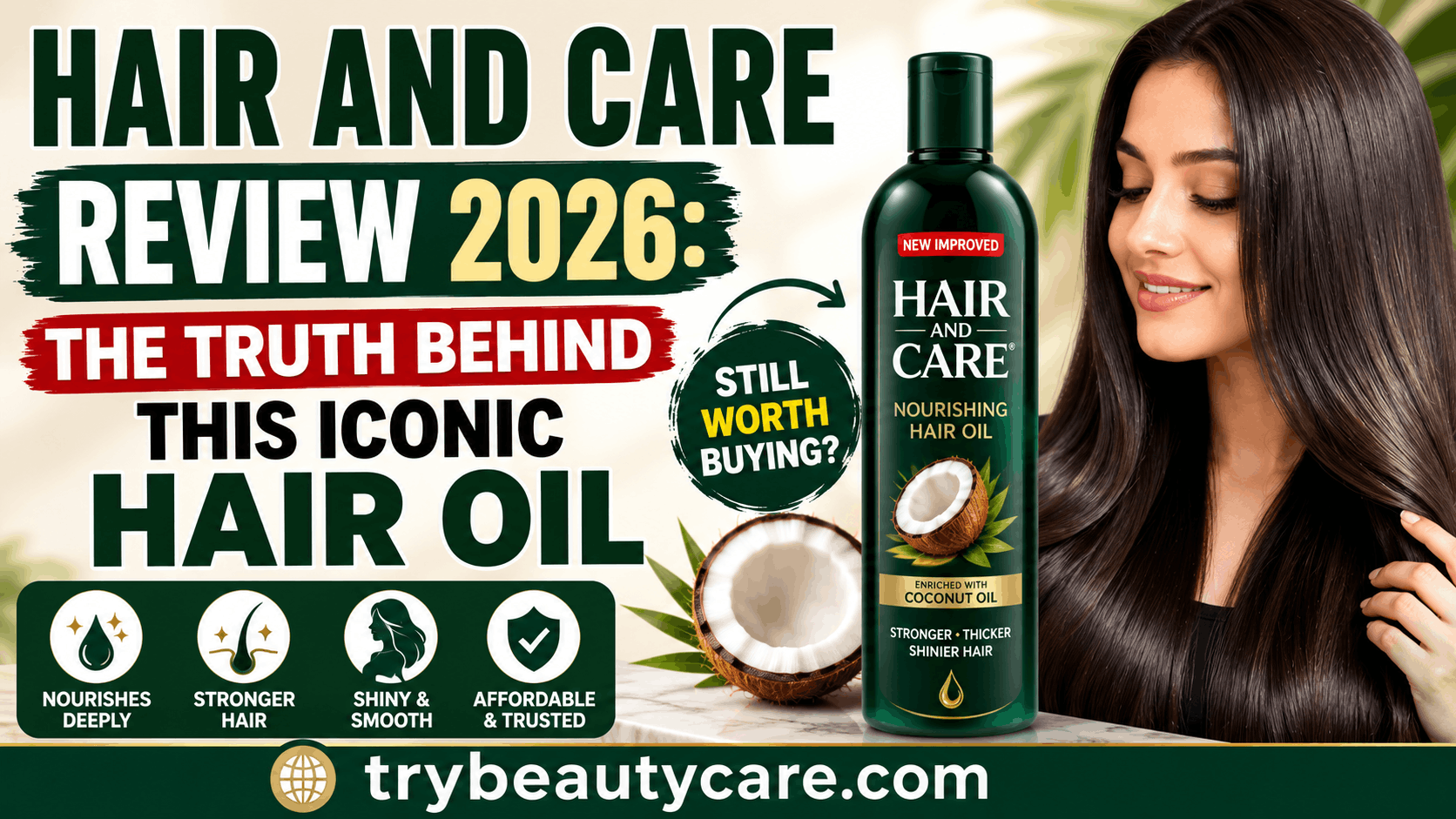
Hook Introduction
There’s a good chance you’ve seen a bottle of Hair and Care sitting somewhere in your home at least once.

Maybe it was on your mother’s dressing table. Maybe your grandmother used it every weekend. Perhaps you even remember that familiar fragrance every time someone oiled their hair before school.
What’s interesting is that while hundreds of beauty products have come and gone over the years, Hair & Care somehow survived.
That alone raises an interesting question.
How does a hair oil that became popular decades ago still manage to hold shelf space in 2026 when consumers now have access to luxury serums, scalp treatments, viral TikTok products, salon-grade oils, and countless hair-growth solutions?
The beauty industry changes incredibly fast. Products that trend today often disappear tomorrow.
Yet Hair & Care remains surprisingly relevant.
Some people buy it because it’s affordable.
Others buy it because it’s familiar.
And some simply trust what has worked for generations.
But does familiarity automatically mean effectiveness?
That’s what this review aims to answer.
Instead of repeating marketing claims or blindly praising a well-known brand, we’ll take a realistic look at where Hair & Care fits in a modern hair care routine and whether it still deserves your money in 2026.
Why Hair & Care Has Survived for Decades
One of the biggest mysteries in beauty isn’t why new products become popular.
It’s why certain old products never disappear.
Hair & Care belongs to that category.
The product has remained recognizable across multiple generations despite major changes in consumer behavior.
Familiarity Creates Trust
When people see a product repeatedly throughout their lives, they naturally become more comfortable purchasing it.
Hair & Care benefits from decades of visibility.
Consumers often associate it with:
- Family traditions
- Weekend oiling routines
- Childhood memories
- Affordable self-care
That emotional connection is something newer brands often struggle to build.
Affordability Matters More Than Ever
The average consumer in 2026 faces endless beauty choices.
A premium hair oil can easily cost several times more than traditional alternatives.
Not everyone wants to spend luxury prices for everyday hair maintenance.
Hair & Care occupies an interesting position.
It remains accessible for:
- Students
- Families
- Budget-conscious shoppers
- First-time hair oil users
For many people, affordability isn’t a compromise.
It’s a requirement.
It Solves a Simple Problem
Many modern beauty products try to do everything.
Hair growth.
Scalp repair.
Heat protection.
Split-end recovery.
Frizz control.
Color preservation.
Hair & Care has always taken a simpler approach.
It focuses primarily on lubrication, softness, and routine hair maintenance.
Sometimes simplicity survives longer than complexity.
Multi-Generational Use
Very few hair products can claim that grandparents, parents, and children have all used them.
Hair & Care is one of those rare exceptions.
That kind of longevity creates a level of brand recognition that newer competitors spend millions trying to achieve.
Understanding Hair & Care Hair Oil
Before deciding whether Hair & Carehttps://en.wikipedia.org/wiki/Hair_care is worth buying, it helps to understand what it actually is.
A surprising number of people purchase hair oils with expectations they were never intended to fulfill.
Hair Oil Versus Hair Growth Product
This distinction matters.
Hair oils and hair growth treatments are not the same thing.
A hair growth treatment generally focuses on stimulating follicles or addressing specific causes of thinning.
Hair oil serves a different purpose.
Its primary role often revolves around:
- Reducing friction
- Improving softness
- Creating shine
- Helping manage dryness
- Supporting hair appearance
Confusing these categories leads to disappointment.
Someone expecting dramatic hair regrowth from a traditional cosmetic oil may end up judging the product unfairly.
Where Hair & Care Fits in a Routine
Most people use Hair & Care in one of three ways:
Pre-Wash Treatment
Applied several hours before shampooing.
This remains one of the most traditional approaches.
Overnight Oiling
Applied before bed and washed out the next morning.
Many long-hair enthusiasts still prefer this method.
Light Daily Application
Used sparingly to reduce flyaways and add shine.
The amount matters significantly.
A few drops create a very different result than a heavily saturated application.
How Younger Consumers Use It Differently
Twenty years ago, oiling often meant soaking the scalp and hair generously.
Today’s consumers tend to be more selective.
Many now:
- Use smaller amounts
- Focus on hair lengths
- Combine oils with masks
- Alternate between oils and serums
- Use targeted scalp products separately
Hair care routines have become more customized than ever.
Hair & Care has adapted by becoming one option among many rather than the entire routine.
What’s Changed in Hair Care Since Hair & Care Became Popular?
One reason reviews need updating is because the beauty landscape changes constantly.
A product cannot be judged fairly without considering the environment in which it’s being used.
The Rise of Scalp Care
Years ago, most consumers focused primarily on hair strands.
Today, scalp health receives far more attention.
People discuss:
- Scalp microbiomes
- Exfoliation
- Buildup removal
- Scalp serums
- Follicle health
This shift changed purchasing habits dramatically.
Hair Growth Became a Massive Category
Social media accelerated consumer interest in growth-focused products.
People now actively search for:
- Growth serums
- Hair density treatments
- Peptide products
- Scalp stimulators
Traditional oils like Hair & Care are often compared against products they were never intended to compete with.
Leave-In Products Exploded
Modern consumers frequently use:
- Leave-in conditioners
- Hair milks
- Curl creams
- Bond builders
- Heat protectants
A single bottle of hair oil is no longer expected to do everything.
That’s actually an advantage because it allows Hair & Care to focus on its core purpose.
Social Media Changed Expectations
Platforms like TikTok have shortened attention spans.
People want dramatic transformations quickly.
Hair care rarely works that way.
Traditional products often emphasize consistency rather than instant gratification.
That’s one reason older products sometimes receive unfair criticism from consumers expecting overnight results.
Ingredients Breakdown
One of the smartest ways to evaluate any beauty product is to look beyond branding and focus on formulation philosophy.
Hair & Care has historically positioned itself around lightweight nourishment rather than extremely rich oiling.
Coconut-Based Influence
Coconut-derived ingredients have long been associated with hair care.
The appeal comes from their ability to create softness and reduce the rough feeling that dryness often creates.
For people accustomed to heavy traditional oils, this approach can feel lighter and easier to manage.
Lightweight Feel
One reason some users continue purchasing Hair & Care is because it doesn’t always feel as heavy as thicker alternatives.
That’s especially appealing for:
- Busy professionals
- Students
- People who dislike greasy residue
Texture often influences consistency more than ingredient marketing.
A product that’s pleasant to use usually gets used more often.
And consistency usually matters more than perfection.
Texture, Feel, and Everyday Experience
A hair oil can have excellent ingredients on paper and still disappoint in real life.
That’s because people experience products through texture first.
The way an oil spreads, absorbs, and feels throughout the day often determines whether someone continues using it.
First Impression
Hair & Care feels lighter than many traditional heavy oils.
Instead of creating an immediate greasy coating, it spreads relatively easily through the hair.
For someone switching from thick coconut oil, the texture may feel surprisingly manageable.
How It Feels on Dry Hair
When applied to dry hair lengths, the oil creates a smoother surface and helps reduce the rough feeling that often appears after repeated washing.
The effect is usually most noticeable on:
- Mid-lengths
- Ends
- Areas prone to tangling
Hair that feels straw-like after shampooing often appears softer after oiling.
Greasiness Level
This is where application amount becomes important.
A few drops can create softness and shine.
Half a handful can make hair look overly oily.
Many negative reviews of hair oils come from overapplication rather than formulation problems.
Styling Impact
People who blow-dry, straighten, or style their hair regularly often care about how a product behaves after application.
Hair & Care works best when used as a preparation or maintenance product rather than a finishing styling product.
Those expecting a silicone-serum finish may notice a difference.
Traditional oils and modern serums create very different visual results.
Daily Usability
One reason the product remains popular is convenience.
The routine is straightforward:
- Apply
- Leave for several hours or overnight
- Wash
There are no complicated instructions, mixing requirements, or special application techniques.
Sometimes simplicity becomes a major advantage.
read also: Treluxe Hair Care Review 2026: The Curl Secret Everyone Is Talking About
Who Might Love Hair & Care?
No hair product works equally well for everyone.
Understanding who benefits most often matters more than understanding the ingredient list.
People With Dry Hair
Dry hair frequently lacks smoothness.
The strands may feel rough when touched and become difficult to manage.
Hair oils often work best when dryness is the primary concern.
Long Hair Owners
Long hair experiences more friction.
The ends have survived years of brushing, washing, styling, and environmental exposure.
As hair length increases, lubrication becomes increasingly valuable.
Many long-hair enthusiasts still maintain regular oiling habits for this reason.
Budget-Conscious Shoppers
A growing number of beauty consumers are questioning whether expensive products always justify their prices.
Hair & Care remains appealing because it offers a familiar experience without demanding a premium budget.
Traditional Hair Oiling Fans
Some people genuinely enjoy the ritual itself.
The act of applying oil, massaging the scalp, and dedicating time to self-care remains important regardless of trends.
Hair & Care fits naturally into those routines.
Who Might Not Love It?
Balanced reviews matter.
Understanding limitations is just as valuable as understanding strengths.
Fine Hair Types
Fine hair often becomes weighed down more easily.
Even moderate oil application can create a flat appearance.
For these individuals, lightweight serums may sometimes feel more comfortable.
Naturally Oily Scalps
Adding additional oil to an already oily scalp may create an uncomfortable experience.
The result can feel excessive rather than beneficial.
Minimalist Beauty Enthusiasts
Some consumers prefer extremely simplified routines.
If someone already uses leave-ins, masks, serums, and conditioning treatments, adding another product may feel unnecessary.
Fragrance-Sensitive Individuals
Hair oils frequently contain fragrance components.
People who prefer unscented products may want to evaluate fragrance preferences before purchasing.
Hair & Care vs Modern Hair Oils
The hair oil market looks very different compared to a decade ago.
Consumers now choose from hundreds of options.
Hair & Care vs Pure Coconut Oil
Pure coconut oil offers a more traditional experience.
Hair & Care generally feels easier to spread and manage.
The choice often comes down to personal preference.
Hair & Care vs Argan Oil Products
Argan oils usually target shine and lightweight finishing.
Hair & Care tends to align more closely with traditional oiling routines.
Hair & Care vs Premium Salon Oils
Salon oils often focus on styling performance.
They frequently emphasize:
- Smoothness
- Heat styling
- Frizz management
- Cosmetic finish
Hair & Care focuses more on routine nourishment.
Hair & Care vs Hair Serums
Serums and oils are often confused.
Serums usually provide immediate cosmetic benefits.
Hair oils are generally integrated into longer-term routines.
Comparing them directly isn’t always fair because they serve different purposes.
Common Mistakes People Make With Hair Oils
Mistake 1: Using Too Much Product
Why it happens:
People assume more product means better results.
What goes wrong:
Hair becomes greasy and difficult to wash.
Better alternative:
Start small and increase only if necessary.
Mistake 2: Applying Oil to Dirty Hair Repeatedly
Why it happens:
Some people continuously add more oil without cleansing.
What goes wrong:
Product buildup accumulates.
Better alternative:
Maintain a consistent wash schedule.
Mistake 3: Expecting Hair Growth Overnight
Why it happens:
Marketing messages create unrealistic expectations.
What goes wrong:
Consumers become frustrated.
Better alternative:
Evaluate improvements in softness and manageability first.
Mistake 4: Ignoring Scalp Health
Why it happens:
Focus remains entirely on hair strands.
What goes wrong:
Underlying scalp concerns remain unaddressed.
Better alternative:
Combine proper cleansing with oiling routines.
Mistake 5: Following Viral Trends Blindly
Why it happens:
Social media encourages imitation.
What goes wrong:
Routines become disconnected from actual hair needs.
Better alternative:
Choose products based on your own hair type.
Cost vs Value Analysis
Price alone doesn’t determine value.
A product that sits unused in a cabinet is expensive regardless of cost.
A product used consistently often becomes valuable even if it isn’t perfect.
Affordability Factor
Hair & Care remains one of the more accessible options in many markets.
For consumers building a routine on a budget, affordability matters.
Cost Per Use
Hair oils generally last a long time.
Even frequent users often need relatively small amounts per application.
That lowers long-term ownership costs.
Comparing With Premium Alternatives
Some luxury oils cost several times more.
The question becomes:
Will the average person experience several times better results?
In many cases, the answer is not straightforward.
The gap in performance often isn’t as dramatic as the gap in price.
Real-Life Scenarios
College Student on a Budget
A student wants healthier-looking hair but doesn’t want to spend heavily.
Hair & Care may fit comfortably into that budget.
Busy Professional
Someone with limited time needs a straightforward routine.
Overnight application followed by a morning wash fits many schedules.
Recovering From Heat Damage
Hair exposed to frequent styling often feels rough.
A consistent oiling routine may help improve softness over time.
Growing Long Hair
Long-hair goals require patience.
Reducing friction and maintaining manageable lengths becomes increasingly important.
This is one area where traditional oiling routines continue to appeal to many people.
Read also: Best barrier moisture for skin repair: Top Medical Grade Choices 2026
What Most Hair & Care Reviews Get Wrong
Many reviews judge Hair & Care as though it’s competing directly with modern hair growth systems.
That comparison creates confusion.
Hair growth treatments and hair oils solve different problems.
Hair & Care belongs to the hair maintenance category.
When evaluated within that category, the discussion becomes much more realistic.
A product doesn’t need to promise miraculous growth to provide value.
Sometimes softer, smoother, more manageable hair is enough.

Would I Repurchase Hair & Care in 2026?
If my primary goal was affordable routine hair maintenance, yes.
If my goal was aggressive hair-growth intervention, probably not.
That’s the difference.
The product performs best when expectations align with its purpose.
Used correctly, it remains a practical option.
Used as a miracle solution, disappointment becomes more likely.
Expert Hair Oil Tips
Hair oiling sounds simple, but small adjustments can make a noticeable difference.
Match the Amount to Your Hair Type
One of the biggest mistakes people make is copying someone else’s routine.
A person with waist-length thick hair may need several times more oil than someone with fine shoulder-length hair.
Instead of following social media measurements, start with the smallest amount possible and adjust gradually.
Focus on Hair Lengths if Your Scalp Gets Oily
Many people assume oil must always go directly onto the scalp.
That’s not necessarily true.
If your scalp naturally produces plenty of oil, concentrating on the mid-lengths and ends may create a more balanced result.
Don’t Treat Hair Oil Like a Styling Product
Hair oils and styling serums have different jobs.
Applying large amounts of oil immediately before leaving the house often creates a greasy appearance.
Using oil as a treatment rather than a styling finish usually produces better results.
Pair Oiling With Good Washing Habits
Oiling alone won’t solve every hair concern.
A healthy routine typically includes:
- Proper cleansing
- Conditioning
- Occasional deep treatments
- Heat protection when necessary
Hair oil works best as one piece of a complete routine.
Be Consistent Instead of Extreme
Applying a reasonable amount once or twice weekly often works better than applying excessive amounts occasionally.
Consistency usually beats intensity.
Hair & Care After 30 Days: What Changed and What Didn’t
One of the most realistic ways to evaluate any product is to separate visible improvements from unrealistic expectations.
What May Change
After consistent use, many people notice:
- Softer hair texture
- Easier detangling
- Improved shine
- Reduced roughness
- Better manageability
These improvements align with what hair oils traditionally do well.
What May Not Change
Some expectations go beyond the purpose of a cosmetic hair oil.
For example:
- Genetic hair loss
- Medical scalp conditions
- Significant thinning caused by health issues
- Instant hair growth
Those concerns often require different approaches.
Understanding this distinction helps prevent disappointment.
Is Hair & Care a Hair Growth Product or Simply a Hair Oil?
This question appears surprisingly often.
The answer is straightforward.
Hair & Care is primarily a hair oil.
That may sound obvious, but modern marketing has blurred the line between cosmetic products and growth-focused treatments.
What Hair Oils Usually Do
Hair oils generally focus on:
- Lubrication
- Softness
- Appearance
- Frizz reduction
- Manageability
What Hair Oils Usually Don’t Do
Hair oils are not magic solutions.
They generally aren’t intended to:
- Cure hair loss
- Reverse genetics
- Instantly increase density
- Replace medical treatments
This doesn’t make them ineffective.
It simply means they belong to a different category.
Understanding the category is the key to evaluating the product fairly.
Why Hair & Care Still Exists While Hundreds of Hair Oils Disappeared
The beauty industry is ruthless.
Products disappear every year.
Yet Hair & Care remains available decades after its introduction.
Why?
Accessibility
Consumers can often find it easily.
Availability matters.
A fantastic product hidden in specialty stores rarely achieves mass adoption.
Familiarity
People tend to repurchase products they already understand.
Trust develops over time.
Simplicity
Some products survive because they solve one problem reasonably well.
Hair & Care never tried to become everything.
It remained a straightforward hair oil.
Value
Not everyone wants luxury beauty pricing.
Affordable products continue attracting buyers, especially when they deliver consistent experiences.

Myths vs Facts
Myth 1: Hair & Care Instantly Grows Hair
Fact:
Hair growth is a complex biological process.
A hair oil may contribute to a healthier routine, but instant growth promises should always be viewed skeptically.
Myth 2: More Oil Equals Better Results
Fact:
Overapplication often creates buildup rather than better outcomes.
Appropriate amounts usually work best.
Myth 3: Hair Oils Replace Conditioner
Fact:
Conditioners and oils perform different functions.
Many routines benefit from both.
Myth 4: Expensive Hair Oils Are Always Better
Fact:
Price and performance don’t always increase together.
Some affordable products perform surprisingly well within their intended category.
Myth 5: Hair Oiling Is Outdated
Fact:
Traditional oiling remains popular because many people continue enjoying the results and ritual.
Modern routines have evolved, but oiling hasn’t disappeared.
Frequently Asked Questions
1. Is Hair & Care good for dry hair?
It tends to work best for people whose primary concern is dryness and rough texture.
Dry hair often benefits more from oiling routines than naturally oily hair.
2. Can I use Hair & Care every day?
Daily use depends on your hair type.
Some people prefer occasional treatments, while others use small amounts regularly.
3. Does Hair & Care help with frizz?
Hair that becomes frizzy because of dryness often appears smoother after oiling.
However, results vary depending on the cause of the frizz.
4. Is Hair & Care suitable for long hair?
Long hair frequently experiences friction and dryness near the ends.
Many long-hair enthusiasts incorporate oils into their routines for this reason.
5. Does Hair & Care make hair greasy?
It can if too much product is used.
Application amount plays a major role in the final appearance.
6. Is Hair & Care better than coconut oil?
Neither option is universally better.
Some people prefer pure oils, while others enjoy the lighter experience Hair & Care offers.
7. Can men use Hair & Care?
Absolutely.
Hair oils are not gender-specific products.
The decision should depend on hair needs rather than marketing categories.
8. Is Hair & Care worth buying in 2026?
For people seeking affordable hair maintenance and softness, it remains a reasonable option.
For individuals specifically searching for advanced growth treatments, other categories may be more appropriate.
Final Verdict
Hair & Care occupies an interesting place in the modern beauty industry.
It isn’t the newest product.
It isn’t the trendiest product.
And it certainly isn’t the most expensive product.
Yet it continues surviving while countless competitors disappear.
That longevity says something.
Hair & Care remains relevant because it understands its role.
It doesn’t need luxury packaging or viral marketing campaigns to attract attention. Instead, it appeals to consumers who value familiarity, affordability, and straightforward hair care.
Strengths
- Budget-friendly
- Widely recognized
- Easy to use
- Suitable for traditional oiling routines
- Helpful for dryness and rough texture
Weaknesses
- May feel heavy for some hair types
- Not ideal for very oily scalps
- Can be misunderstood as a hair-growth product
- Fragrance may not suit everyone
Best Users
- Dry hair types
- Long hair owners
- Budget-conscious shoppers
- Traditional oiling enthusiasts
Worst Users
- Extremely fine hair types
- Very oily scalps
- People seeking medical hair-loss solutions
- Consumers wanting ultra-lightweight serum finishes
So, is Hair & Care still worth buying in 2026?
For the right person, yes.
Not because it’s revolutionary.
Not because it’s trending.
But because it continues delivering a familiar experience at a price many people appreciate.
The biggest lesson from this review is simple:
Healthy-looking hair rarely comes from one miracle product. It comes from consistent habits, realistic expectations, and choosing products that match your actual needs rather than chasing every trend that appears online.
Hair & Care may not be the most exciting bottle on the shelf, but for many people, it still earns its place there.

1 thought on “Hair and Care Review 2026: Is This Classic Hair Oil Still Worth Buying?”