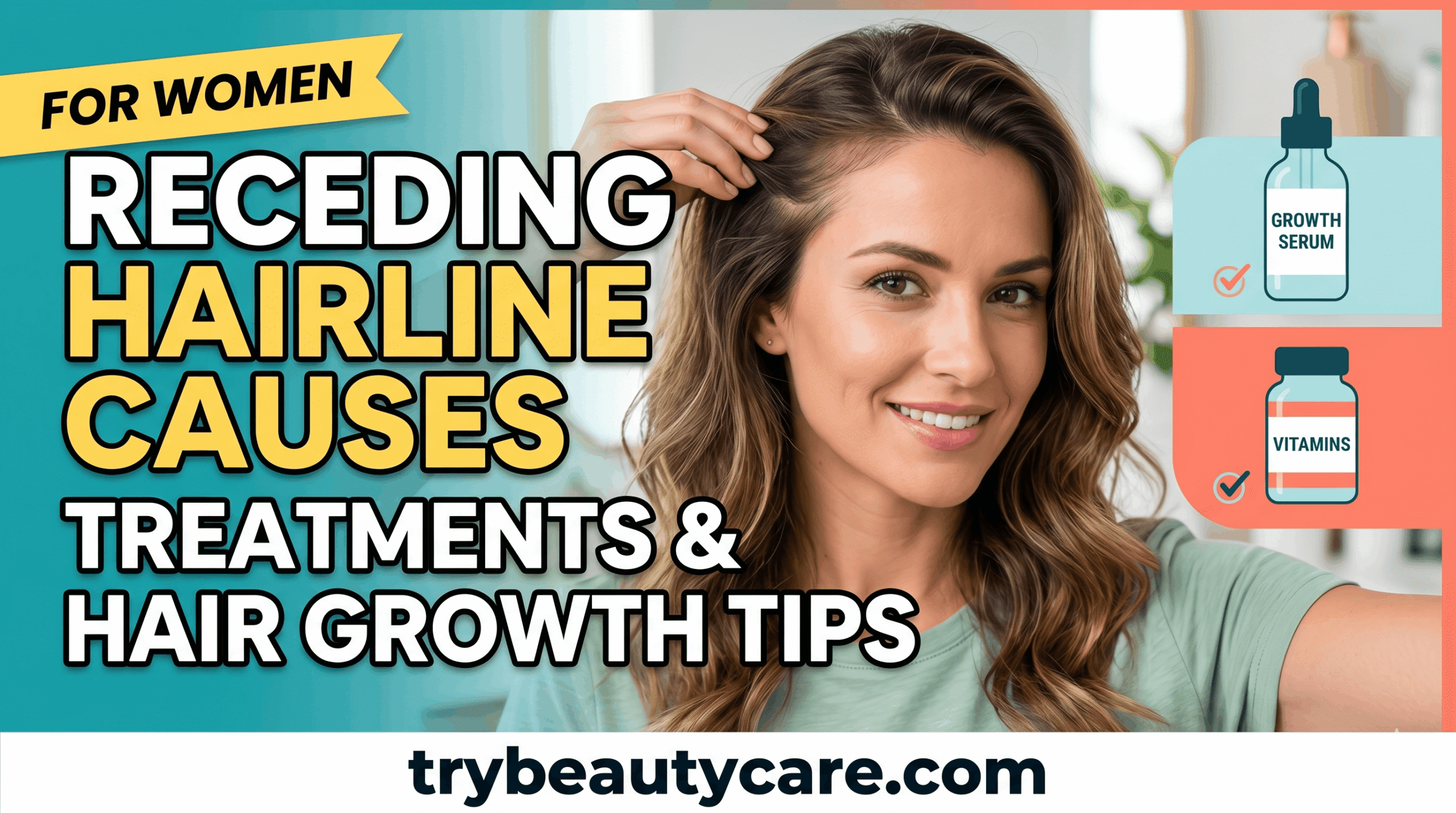
A receding hairline is one of the most common hair concerns seen today, especially in young adults and middle-aged people. It usually starts slowly near the forehead or temples, where the hairline begins to move backward over time.

For many people, this change can feel stressful because hair plays a big role in appearance and confidence. The good part is that a receding hairline does not always mean permanent hair loss. In many cases, it can be managed or improved with the right care, routine, and lifestyle changes.
Modern haircare focuses more on:
- Scalp health
- Gentle routines
- Nutrition support
- Stress control
- Consistent care habits
In this complete guide, you will learn what causes a receding hairline, early warning signs, natural improvement methods, and daily haircare routines that may support healthier hair growth.
What Is a Receding Hairline?
A receding hairline is a gradual loss of hair along the front hairline, usually starting at the temples and moving backward over time. It is one of the earliest and most noticeable signs of hair thinning or pattern hair loss in both men and women.
In many cases, the hairline changes from a straight or rounded shape into an “M-shaped” pattern. The process can happen slowly over several years or progress more quickly depending on genetics, hormones, age, lifestyle, and overall scalp health.
Common Signs of a Receding Hairline
- Thinning hair near the temples
- More forehead visibility than before
- Uneven or changing hairline shape
- Excess hair shedding while washing or combing
- Hair becoming finer and weaker at the front
- Difficulty styling the front hair area
Main Causes of a Receding Hairline
Genetics
Family history is the most common reason. If close relatives experienced hair loss, the chances are higher that you may also develop a receding hairline.
Hormonal Changes
Hormones called androgens, especially DHT (dihydrotestosterone), can shrink hair follicles and shorten the hair growth cycle.
Aging
Hair naturally becomes thinner and grows more slowly with age, making the hairline gradually move back.
Stress and Lifestyle
Poor sleep, emotional stress, smoking, crash dieting, and unhealthy scalp habits can worsen hair thinning.
Tight Hairstyles
Constant pulling from ponytails, braids, buns, or tight hairstyles may lead to traction alopecia, which can damage the hairline over time.
Medical Conditions
Conditions like thyroid disorders, scalp infections, nutritional deficiencies, or autoimmune diseases can contribute to hairline recession.
Types of Receding Hairline Patterns
Male Pattern Hair Loss
Often begins at the temples and crown and may eventually lead to partial or complete baldness.
Female Pattern Hair Loss
Women usually experience diffuse thinning rather than deep temple recession, though the frontal hairline can still thin noticeably.
Mature Hairline
Not every changing hairline means balding. Many adults naturally develop a slightly higher “mature hairline” without major hair loss.
Can a Receding Hairline Be Treated?
In many cases, yes. Early treatment often gives the best results.
Common treatment options include:
- Scalp care and healthy hair routines
- Improving nutrition and reducing stress
- Hair growth medications such as Minoxidil
- Prescription treatments like Finasteride for suitable candidates
- PRP therapy and dermatology treatments
- Hair transplant procedures for advanced hair loss
When to See a Dermatologist
You should consider professional advice if:
- Hair loss is sudden or severe
- You notice bald patches
- The scalp becomes itchy, painful, or inflamed
- Hair thinning affects confidence or daily life
- Over-the-counter products are not helping
Early diagnosis can help identify the exact cause and improve treatment success.
Main Causes of Receding Hairline
Genetics and Family History
Genetics is one of the strongest factors behind a receding hairline. If hair thinning runs in your family, there is a higher chance of experiencing similar changes.
Genetic hair loss usually develops slowly and gradually over time.
Stress and Lifestyle Pressure
High stress levels can negatively affect hair growth cycles. Long-term stress may lead to:
- Increased hair shedding
- Weak hair roots
- Slower regrowth
Poor sleep and unhealthy routines can make the situation worse.
Poor Scalp Health
A healthy scalp is the foundation of healthy hair. If the scalp is not properly cared for, it may lead to:
- Oil buildup
- Dryness
- Dandruff
- Poor hair growth environment
Heat Styling Damage
Frequent use of heat tools can weaken hair strands. Over time, this may cause:
- Breakage
- Dryness
- Thinning appearance
Examples include:
- Straighteners
- Curling irons
- Blow dryers
Tight Hairstyles
Tight hairstyles can put stress on the hairline.
These include:
- Tight ponytails
- Braids
- Buns
- Extensions
Continuous pulling may weaken hair roots over time.

Early Signs of Receding Hairline
Best Haircare Routine for Receding Hairline
A proper haircare routine can help support scalp health, reduce unnecessary hair breakage, and slow the appearance of hair thinning. While no routine can completely reverse genetic hair loss on its own, consistent care may improve hair strength, texture, and overall scalp condition.
1. Use a Gentle Shampoo
Choose a mild, sulfate-free shampoo that cleans the scalp without stripping away natural oils. Harsh shampoos can dry the scalp and weaken fragile hair near the hairline.
Look for ingredients such as:
- Biotin
- Caffeine
- Ketoconazole
- Niacinamide
- Saw palmetto
Wash your hair 2–4 times per week depending on scalp oiliness and lifestyle.
2. Condition the Hair Properly
Apply conditioner mainly to the mid-lengths and ends while lightly moisturizing the front hairline area. Conditioning helps reduce dryness, tangles, and hair breakage.
Avoid very heavy products that can clog the scalp.
3. Keep the Scalp Clean and Healthy
A healthy scalp supports healthier hair growth. Excess oil buildup, dandruff, and inflammation may worsen thinning.
Helpful scalp habits include:
- Gentle scalp massage for circulation
- Avoiding scratching the scalp
- Using anti-dandruff products if needed
- Keeping hair tools and pillowcases clean
4. Avoid Tight Hairstyles
Tight ponytails, buns, braids, and constant pulling can stress the hair follicles and worsen hairline recession over time.
Choose looser hairstyles that reduce tension around the temples and front hairline.
5. Reduce Heat and Chemical Damage
Frequent heat styling, bleaching, straightening, and harsh chemical treatments can weaken already thinning hair.
Try to:
- Limit blow-drying and straightening
- Use heat protectant sprays
- Avoid excessive coloring treatments
- Let hair air dry when possible
6. Improve Nutrition
Hair health is closely connected to nutrition. A balanced diet may help support stronger hair growth.
Important nutrients include:
- Protein
- Iron
- Zinc
- Vitamin D
- Omega-3 fatty acids
- Biotin
Foods like eggs, nuts, fish, leafy greens, beans, and seeds can support scalp and hair health.
7. Manage Stress Levels
Chronic stress can contribute to increased hair shedding and weaker hair growth cycles.
Helpful stress-management habits include:
- Regular exercise
- Better sleep
- Meditation or yoga
- Limiting overwork
- Staying hydrated
8. Use Proven Hair Growth Treatments
Some people benefit from clinically supported treatments such as:
- Minoxidil for stimulating hair growth
- Finasteride for reducing hormone-related hair loss in suitable candidates
These treatments should ideally be used with medical guidance for best results and safety.
9. Protect the Hairline From Daily Damage
Small daily habits can make a difference over time.
Try to avoid:
- Aggressive towel drying
- Constant touching or pulling of hair
- Sleeping with wet hair
- Cheap hard-bristle brushes
Use soft microfiber towels and wide-tooth combs whenever possible.
10. Be Consistent and Patient
Hair growth changes happen slowly. Most routines and treatments require several months of consistency before noticeable improvements appear.
Tracking progress with monthly photos can help you notice gradual changes more clearly.
Best Ingredients for Receding Hairline Care
Choosing the right ingredients can help support scalp health, strengthen weak hair, and reduce further thinning around the hairline. While results vary from person to person, several ingredients are commonly used in modern haircare routines for improving the appearance and condition of thinning hair.
1. Minoxidil
Minoxidil is one of the most widely used ingredients for hair regrowth. It helps improve blood flow to hair follicles and may extend the hair growth cycle.
Benefits
- Supports hair regrowth
- May slow hair shedding
- Helps improve hair thickness
Common Forms
- Foam
- Liquid solution
- Scalp serum
2. Caffeine
Caffeine is commonly added to shampoos and scalp treatments because it may help stimulate hair follicles and support stronger-looking hair.
Benefits
- Energizes the scalp
- May reduce hair weakness
- Helps improve scalp circulation
3. Ketoconazole
Ketoconazole is an antifungal ingredient often found in medicated shampoos. It may also help reduce scalp inflammation linked to hair thinning.
Benefits
- Helps control dandruff
- Reduces scalp irritation
- Supports a healthier scalp environment
4. Biotin
Biotin, also known as vitamin B7, supports keratin production, which is important for healthy hair structure.
Benefits
- Supports stronger hair strands
- May reduce brittleness
- Helps improve overall hair appearance
Biotin is commonly found in supplements and strengthening shampoos.
5. Saw Palmetto
Saw palmetto is a plant-based ingredient often used in haircare products targeting hormone-related hair thinning.
Benefits
- May help reduce DHT activity
- Supports healthier follicles
- Common in serums and supplements
6. Niacinamide
Niacinamide helps support the scalp barrier and improve moisture balance.
Benefits
- Soothes the scalp
- Helps reduce dryness
- Supports scalp circulation
It is especially useful for sensitive or irritated scalps.
7. Rosemary Oil
Rosemary oil has become popular in natural haircare routines because it may help stimulate the scalp and improve hair density over time.
Benefits
- Supports scalp circulation
- May reduce hair shedding
- Adds nourishment to the scalp
Always dilute essential oils properly before applying them directly to the scalp.
8. Peptides
Peptides are small protein fragments that help support scalp and follicle health.
Benefits
- Strengthens weak hair
- Supports healthier hair structure
- Often included in advanced scalp serums
9. Hyaluronic Acid
Hyaluronic acid helps maintain moisture in the scalp and hair.
Benefits
- Hydrates dry scalp areas
- Improves scalp comfort
- Supports healthier-looking hair texture
10. Zinc and Iron
Minerals like zinc and iron are important for healthy hair growth and scalp function.
Benefits
- Support healthy follicles
- Help reduce deficiency-related shedding
- Improve overall hair health
These are often obtained through diet or supplements when deficiencies exist.
Ingredients to Avoid
Some harsh ingredients may worsen dryness and breakage around a receding hairline.
Try to limit:
- Strong sulfates
- Excess alcohol-based styling products
- Harsh bleaching chemicals
- Heavy wax buildup
- Excessive fragrance if scalp is sensitive
Daily Hair Growth Support Routine
A simple and consistent routine can help support scalp health, strengthen fragile hair, and reduce everyday damage that may worsen a receding hairline. The goal is not to overload the scalp with products, but to maintain healthy daily habits that support better hair conditions over time.
1. Cleanse With a Gentle Shampoo
Use a mild shampoo that removes oil, sweat, and buildup without drying the scalp. Overwashing or using harsh cleansers may weaken already thinning hair.
Look for shampoos containing supportive ingredients such as:
- Caffeine
- Biotin
- Niacinamide
- Ketoconazole
- Rosemary extract
Wash based on your scalp type, usually 2–4 times weekly.
2. Apply a Lightweight Conditioner
Conditioner helps reduce breakage and dryness while making hair easier to manage.
Focus mainly on:
- Mid-lengths
- Hair ends
- Light application near the hairline if needed
Avoid very heavy or greasy formulas that may weigh down fine hair.
3. Perform a Short Scalp Massage
A gentle scalp massage for 2–5 minutes daily may help improve circulation and relax scalp tension.
Tips for safe scalp massage:
- Use fingertips, not nails
- Apply light pressure
- Avoid aggressive rubbing
- Can be done with or without oil
This habit may also help reduce stress, which can affect hair shedding.
4. Use a Leave-In Hair Serum
Lightweight scalp or hair serums can help nourish the scalp and protect fragile hair around the hairline.
Popular supportive ingredients include:
- Peptides
- Rosemary oil
- Hyaluronic acid
- Caffeine
- Plant extracts
Apply only a small amount to avoid buildup.
5. Stay Properly Hydrated
Hydration supports overall skin and scalp function. Drinking enough water may help maintain healthier scalp conditions and reduce dryness.
Also support hair health with:
- Balanced nutrition
- Protein-rich foods
- Iron and zinc intake
- Healthy sleep habits
6. Protect Hair Throughout the Day
Daily protection is important for preventing unnecessary hair stress.
Try to avoid:
- Tight hairstyles
- Excess heat styling
- Aggressive brushing
- Constant touching or pulling of hair
Use soft towels and wide-tooth combs whenever possible.
7. Maintain Consistency
Hair changes take time. Consistency matters far more than using too many products at once. A simple routine followed regularly is often more effective than constantly changing treatments.
Most people need several months of consistent care before noticing visible improvements in hair texture or reduced shedding.
Nutrition and Hair Health
Hair health is also connected to diet and lifestyle.
Important nutrients include:
- Protein
- Iron
- Zinc
- Vitamins A, C, D, E
- Omega fatty acids
Healthy eating habits may support better hair strength and appearance over time.
Common Mistakes That Worsen Receding Hairline
Many people unknowingly damage their hairline through daily habits, harsh treatments, or inconsistent haircare. Avoiding these common mistakes may help reduce unnecessary hair stress and support healthier scalp conditions over time.
1. Using Harsh Hair Products
Strong shampoos, excessive sulfates, and alcohol-heavy styling products can dry the scalp and weaken fragile hair strands.
Why It Matters
- Increases dryness and breakage
- Irritates the scalp
- Weakens thinning hair near the hairline
Choosing gentler products is often better for sensitive or thinning hair.
2. Tight Hairstyles
Constant tension from tight ponytails, buns, braids, or extensions can pull on the hair follicles and worsen hairline recession.
Common Risky Styles
- Tight ponytails
- Braids
- Man buns
- Cornrows
- Tight hair extensions
Over time, this may lead to traction-related hair loss.
3. Excessive Heat Styling
Frequent use of blow dryers, straighteners, and curling tools can damage the hair shaft and make thinning hair appear worse.
Heat Damage Can Cause
- Hair breakage
- Dryness
- Weak hair texture
- Split ends
Always use heat protection and limit high-temperature styling when possible.
4. Ignoring Scalp Health
A neglected scalp may develop oil buildup, dandruff, irritation, or inflammation that affects hair growth quality.
Poor Scalp Care Habits
- Infrequent washing
- Scratching the scalp
- Heavy product buildup
- Not treating dandruff
Healthy hair growth starts with a healthy scalp environment.
5. Poor Nutrition
Hair follicles require nutrients to function properly. Extreme dieting or nutritional deficiencies may worsen hair thinning.
Important Nutrients
- Protein
- Iron
- Zinc
- Vitamin D
- Omega-3 fatty acids
A balanced diet supports stronger hair structure and healthier growth cycles.
6. High Stress Levels
Long-term stress may increase hair shedding and weaken the hair growth cycle.
Stress-Related Effects
- Increased hair fall
- Poor sleep quality
- Hormonal imbalance
- Scalp tension
Stress management is often an overlooked part of haircare.
7. Switching Products Too Frequently
Constantly changing shampoos, oils, serums, or treatments may irritate the scalp and prevent consistent results.
Haircare products usually need time before improvements become noticeable.
8. Aggressive Brushing or Towel Drying
Rough handling can easily damage fragile hair around the temples and front hairline.
Better Alternatives
- Pat hair dry gently
- Use microfiber towels
- Choose wide-tooth combs
- Avoid brushing wet hair aggressively
9. Delaying Early Treatment
Many people ignore early warning signs and wait until hair loss becomes more advanced.
Early care may help:
- Slow further thinning
- Preserve existing hair
- Improve treatment success rates
Common options may include scalp care, lifestyle improvements, and treatments like Minoxidil or Finasteride when appropriate.
10. Expecting Instant Results
Hair growth is naturally slow. Many people stop routines too early because they expect immediate improvement.
Most haircare routines and treatments require:
- Consistency
- Patience
- Several months of regular use
Hairstyles That Help Receding Hairline
Some hairstyles may help improve appearance:
- Short textured cuts
- Side-swept hairstyles
- Layered cuts
- Volume-enhancing styles
Choosing the right hairstyle can improve confidence.
Professional Hair Treatments
Some people explore professional options for hair concerns.
These may include:
- Scalp therapy
- Hair consultation
- Laser-based treatments
- Advanced scalp care procedures
Professional guidance can help identify personalized solutions.

Natural Ways to Support Hair Growth
Natural haircare habits can help improve scalp health, reduce unnecessary hair stress, and support stronger-looking hair over time. While natural methods may not completely reverse genetic hair loss, consistent healthy habits often contribute to better long-term hair conditions.
1. Reduce Stress Levels
High stress can affect the hair growth cycle and increase hair shedding. Managing stress may help support healthier hair over time.
Helpful stress-management habits include:
- Regular exercise
- Meditation or yoga
- Deep breathing practices
- Spending time outdoors
- Taking breaks from excessive workload
Lower stress levels may also improve sleep quality and overall scalp health.
2. Improve Sleep Quality
The body repairs and regenerates during sleep, including processes related to skin and hair health.
Tips for better sleep:
- Maintain a regular sleep schedule
- Reduce screen time before bed
- Avoid excessive caffeine late in the day
- Create a calm sleeping environment
Poor sleep may contribute to hormonal imbalance and increased hair shedding.
3. Stay Properly Hydrated
Hydration supports overall scalp function and helps maintain healthier skin and hair conditions.
Benefits of proper hydration may include:
- Reduced scalp dryness
- Better scalp comfort
- Healthier-looking hair texture
Drinking enough water daily also supports general body health.
4. Eat Balanced, Nutrient-Rich Meals
Hair follicles require nutrients to support healthy growth cycles.
Important nutrients for hair health include:
- Protein
- Iron
- Zinc
- Vitamin D
- Omega-3 fatty acids
- Biotin
Helpful foods may include:
- Eggs
- Fish
- Nuts and seeds
- Leafy greens
- Beans
- Fruits and vegetables
Extreme dieting and poor nutrition may worsen hair thinning.
5. Practice Gentle Scalp Care
A healthy scalp creates a better environment for healthier hair growth.
Gentle scalp care habits include:
- Using mild shampoos
- Avoiding harsh scratching
- Keeping the scalp clean
- Performing light scalp massages
- Avoiding heavy product buildup
Daily scalp massage for a few minutes may help improve circulation and relaxation.
6. Limit Heat and Chemical Damage
Excessive heat styling and harsh chemical treatments can weaken fragile hair.
Try to:
- Air dry hair when possible
- Reduce straightener and blow dryer use
- Avoid excessive bleaching
- Use heat protectants if styling
Protecting the hair shaft helps reduce breakage and thinning appearance.
7. Avoid Tight Hairstyles
Constant pulling from tight hairstyles can stress the hair follicles and damage the hairline.
Looser hairstyles may help reduce tension around:
- Temples
- Edges
- Front hairline
8. Use Natural Oils Carefully
Some people use natural oils as part of scalp massage routines.
Popular options include:
- Rosemary oil
- Coconut oil
- Argan oil
- Castor oil
Essential oils should always be diluted properly before scalp application.
Frequently Asked Questions
Can a receding hairline be reversed?
In some cases, early-stage hair thinning may improve with proper care and routine.
What is the main cause of receding hairline?
Genetics is the most common cause, but stress and lifestyle also play a role.
How long does hair regrowth take?
Hair growth is slow and may take several months depending on individual conditions.
Can natural remedies help?
Natural methods may support scalp health and hair strength but results vary.
read also: Why My Hair Is Falling So Much and How to Stop It (2026 Guide)
Conclusion
A receding hairline is a common hair concern that develops gradually over time. While it may feel worrying, it can often be managed with proper care, patience, and consistent habits.
The key to healthier hair includes:
- Gentle haircare routines
- Scalp health maintenance
- Proper nutrition
- Stress control
- Consistency
Small daily improvements can lead to noticeable long-term changes in hair health and appearance.

2 thoughts on “Receding Hairline Causes, Treatments & Hair Growth Tips”