
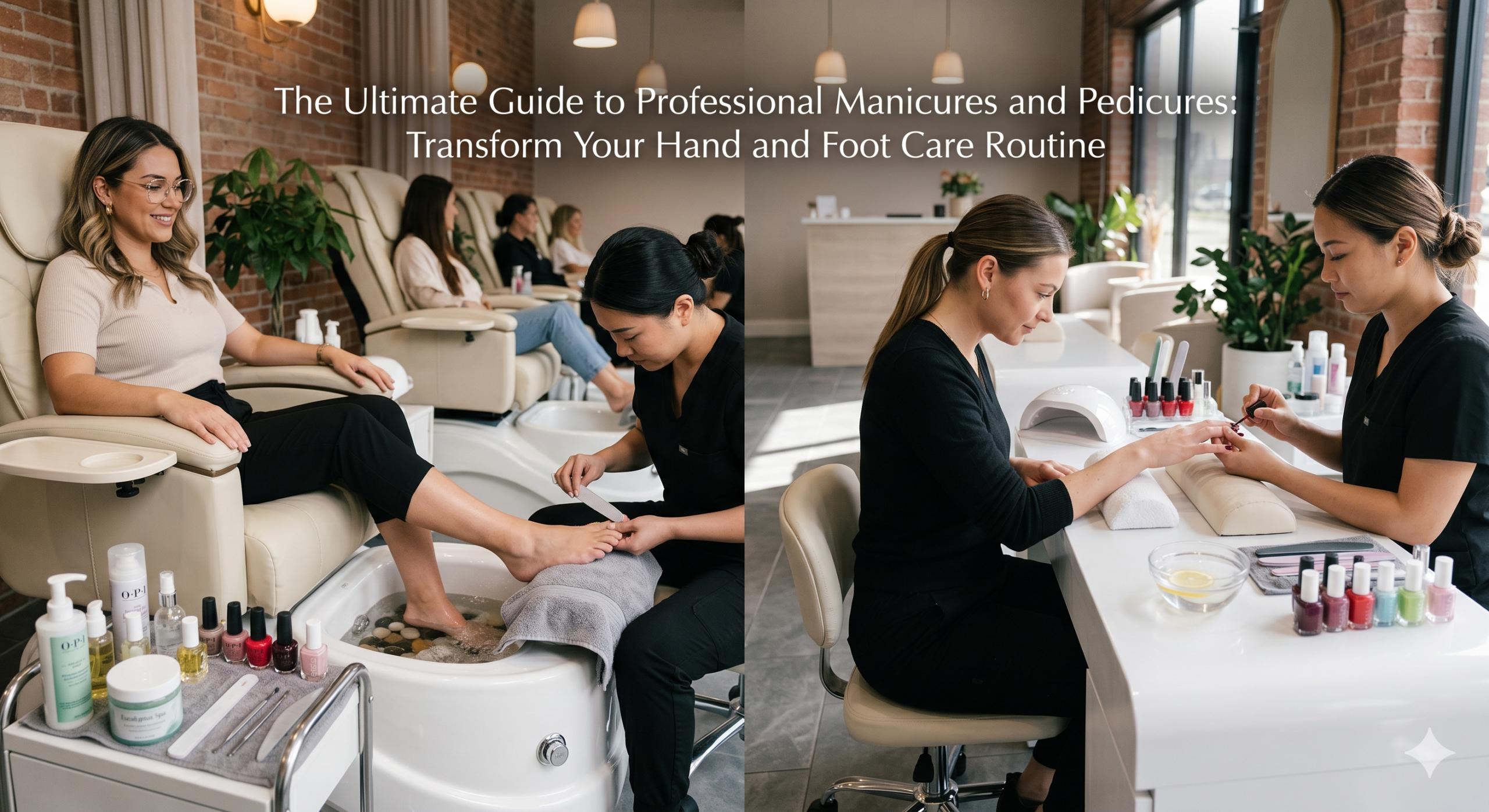
In the world of self-care, few things are as universally satisfying as a fresh manicure and pedicure. Whether you are visiting a high-end salon or perfecting your DIY skills at home, understanding the art and science behind nail care is essential for healthy, beautiful results.
At Trybeautycare.com, we believe that nail care is more than just aesthetics; it is a vital part of personal hygiene and wellness.
1. Why Manicures and Pedicures Matter
Many people view these treatments as a luxury, but they offer significant health benefits:
-
Infection Prevention: Regular cleaning prevents fungal growth and ingrown nails.
-
Blood Circulation: The massage portion of a pedicure stimulates blood flow in the feet and calves.
-
Skin Hydration: Professional products exfoliate dead skin and lock in moisture.
-
Mental Wellness: The relaxation involved reduces stress and anxiety.
2. Types of Manicures: Which One is Right for You?
To dominate the search results for manicure, you need to understand the different techniques:
Basic Manicure
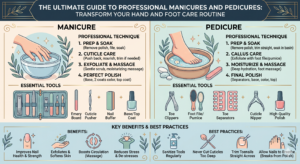
The standard treatment. It involves soaking, shaping, cuticle care, and a standard polish. Perfect for those who like to change their color often.
Gel (Shellac) Manicure
Using a special UV or LED light to cure the polish. This is the gold standard for longevity, lasting up to 3 weeks without chipping.
French Manicure
The timeless classic. A sheer pink or beige base with crisp white tips. It’s the epitome of elegance.
Dip Powder (SNS)
A durable alternative to gel. Your nail is dipped into colored powder and sealed with a clear cyanoacrylate. It is incredibly strong and requires no UV light.
3. The Step-by-Step Pedicure Process
A professional pedicure should be a systematic process to ensure foot health.
-
The Soak: Softens the skin and relaxes the muscles using warm water and Epsom salts.
-
Exfoliation: Using a pumice stone or foot scrub to remove calluses from the heels.
-
Nail Trimming: Cutting nails straight across to prevent painful ingrowns.
-
Cuticle Work: Gently pushing back the cuticles to allow for healthy nail growth.
-
The Massage: Deep tissue stimulation to relieve the pressure of standing all day.
-
Polishing: Applying base coat, color, and topcoat for a flawless finish.
4. Essential Tools for Your Beauty Kit
If you are building your brand at Trybeautycare.com, you must mention these essential tools:
| Tool | Purpose |
| Nail Clippers | Precision cutting of the nail plate. |
| Glass Nail File | Smoothes edges without causing microscopic tears. |
| Cuticle Pusher | Cleans the nail bed for a longer-looking nail. |
| Buffer Block | Creates a smooth surface for polish adhesion. |
| Pumice Stone | The “must-have” for any pedicure to fight dry heels. |
5. Maintenance and Aftercare Tips
To keep your manicure looking fresh:
-
Use Cuticle Oil: Apply daily to prevent cracking and peeling.
-
Wear Gloves: Protect your hands while washing dishes or using harsh chemicals.
-
Don’t Pick: If a gel nail lifts, don’t peel it! You will damage the top layer of your natural nail.
6. Seasonal Nail Care Trends for 2026
-
Spring: Pastel lilacs and “milky” white finishes.
-
Summer: Neon corals and vibrant “Aperol Spritz” orange.
-
Autumn: Deep emerald greens and “dark cherry” mocha tones.
-
Winter: Velvet magnetic polishes and classic metallic silver.
7. Safety and Sanitation
When discussing manicure and pedicure services, hygiene is non-negotiable. Always ensure:
-
Tools are sterilized in an autoclave.
-
Foot tubs are lined or thoroughly disinfected between clients.
-
Technicians wash their hands before starting a service.
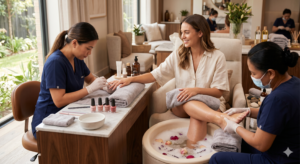
8. The Biological Foundation: Understanding Nail Anatomy
A professional manicure isn’t just about painting the surface; it’s about caring for the living and non-living parts of the hand.
The Nail Plate
The hard part we see is the nail plate, made of translucent keratin. It’s actually comprised of several layers of dead compacted cells. Understanding this helps explain why hydration is key—without it, these layers brittle and flake.
The Matrix
This is the “root” of the nail, located under the skin behind the cuticle. This is where new cells are produced. Any injury to the matrix during a pedicure or manicure can cause permanent ridges or white spots.
The Hyponychium
The area of skin directly under the free edge of your nail. It creates a waterproof seal. Over-cleaning under the nail with sharp tools can break this seal, leading to nail bed separation (onycholysis).
9. Advanced Pedicure Techniques: Beyond the Basic Soak
For Trybeautycare.com to stand out, you should educate your readers on specialized treatments that solve specific foot problems.
Paraffin Wax Treatment
This is a luxurious addition to any manicure or pedicure. Hands or feet are dipped into melted paraffin wax mixed with essential oils.
-
How it works: The wax traps heat against the skin, opening pores and allowing moisturizers to penetrate deeper.
-
Benefit: Excellent for those suffering from arthritis or extremely cracked heels.
Jelly Pedicure
A modern trend where the water is turned into a translucent, fluffy jelly using naturally derived polymers.
-
The Science: The jelly retains heat up to four times longer than regular water, providing a prolonged therapeutic soak that softens even the toughest calluses.
Callus Peel Treatments
Using AHAs (Alpha Hydroxy Acids) or Urea-based creams to chemically break down dead skin. This is often safer and more effective than aggressive physical filing.
10. Common Nail Disorders & Solutions
Your readers will search for solutions to their problems. Including a section on “What to do when things go wrong” builds immense trust.
| Problem | Cause | Manicure/Pedicure Solution |
| Brittle Nails | Over-exposure to water/chemicals | Use keratin-rich strengtheners and jojoba oil. |
| Yellowing | Staining from dark polish or smoking | Light buffing and a high-quality base coat. |
| Ingrown Toenails | Improper cutting or tight shoes | Professional pedicure with “straight across” filing. |
| Ridges | Aging or minor matrix trauma | Ridge-filling base coats and gentle buffing. |
11. The Chemistry of Nail Products
To hit high word counts and authority, explain how the products work.
Base Coats vs. Top Coats
-
Base Coats: Formulated with more “tack” (stickiness) to bond the polish to the nail plate. They also contain resins that prevent pigments from staining the natural nail.
-
Top Coats: High-solids content designed for scratch resistance and UV protection to prevent color fading.
UV vs. LED Curing
Many people use these terms interchangeably, but there is a difference. LED lamps use specific wavelengths to cure gel in 30–60 seconds, whereas traditional UV lamps take 2 minutes. Both involve photo-initiators in the gel reacting to light to create a hard plastic bond.
12. A Deep-Dive DIY Routine (The 5,000-Word Content Strategy)
To truly expand this post for your website, provide a 15-step masterclass for at-home care.
-
Sanitization: Cleaning tools with 70% isopropyl alcohol.
-
Removal: Using non-acetone remover for natural nails to preserve oils.
-
Shaping: Filing in one direction (never “sawing” back and forth).
-
Softening: Using a cuticle remover liquid rather than just water.
-
Detox Mask: Applying a clay mask to the feet during a pedicure.
-
The “Squeaky Clean” Step: Wiping the nail with alcohol before polish to remove oils—this is the secret to a manicure that lasts 10+ days.
13. Sustainability in Nail Care
The modern beauty consumer is looking for “Green Beauty.” Discussing this on Trybeautycare.com will attract a premium audience.
-
10-Free Polishes: Explain what “10-free” means (removing toxic chemicals like Formaldehyde, Toluene, and DBP).
-
Waterless Manicures: A trend that saves gallons of water and reduces the risk of bacterial cross-contamination.
4 thoughts on “The Ultimate Guide to Professional Manicures and Pedicures: Transform Your Hand and Foot Care Routine”