
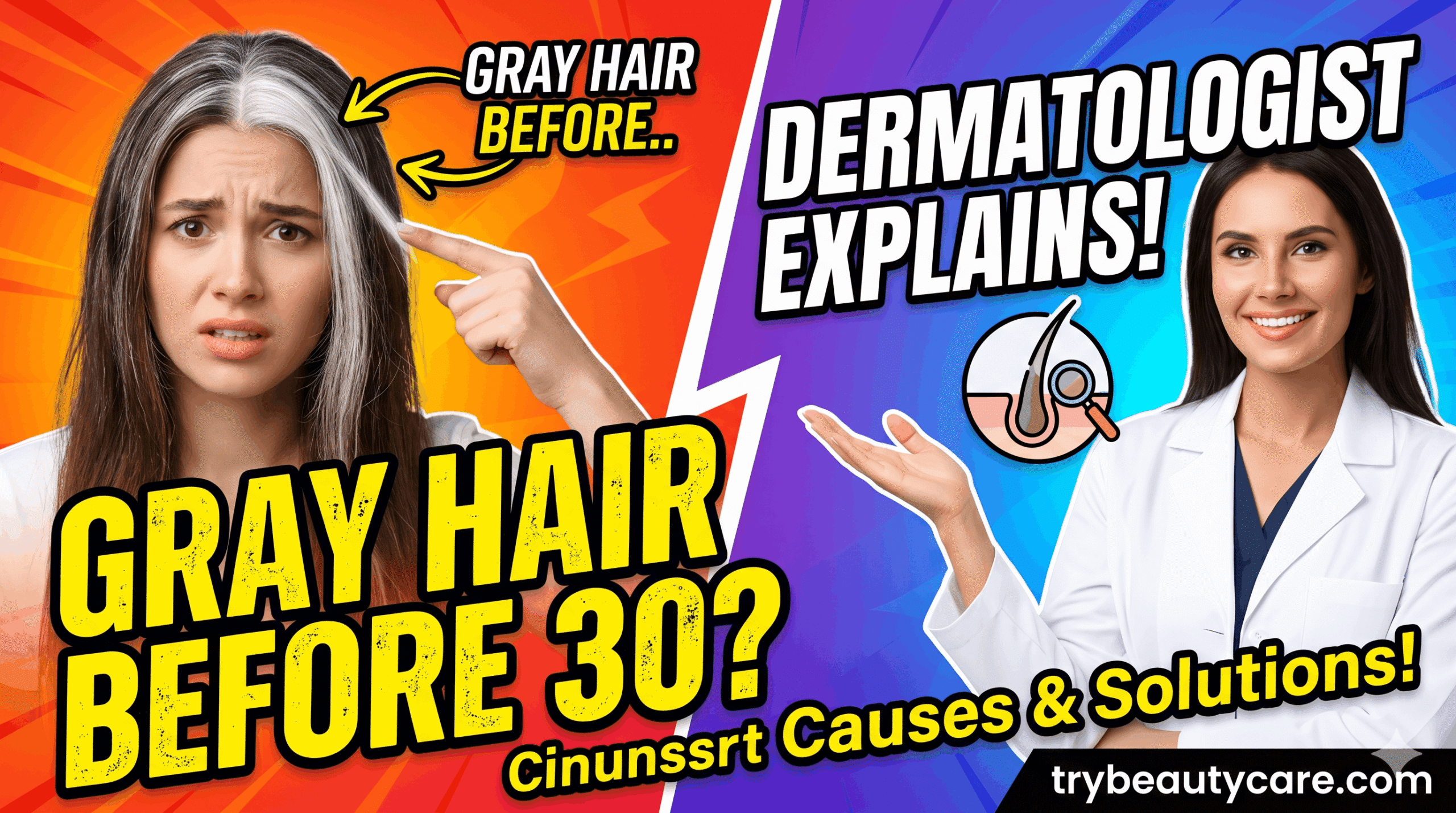
Gray Hair: Finding your first gray can feel surprising. Finding several hairs before age 30 can feel confusing. Many people immediately start asking questions: Why is my hair turning gray so early? Am I missing vitamins? Is stress causing this? Can gray be reversed?

Premature hair is more common than many people think. While gray hair is often associated with aging, some people begin noticing changes in their late teens or twenties.
Social media trends and internet advice often promise quick solutions, miracle oils, or overnight fixes. But hair color changes are more complex. Genetics, lifestyle habits, nutritional factors, and overall health can all play a role.
In this complete guide, you’ll learn:
- Why hair turns gray
- Main causes of hair before 30
- Whether premature hair can be reversed
- Dermatologist insights
- Hair care tips
- Common myths
- Lifestyle habits for healthier hair
What Causes Hair to Turn Gray?
Hair gets its natural color from pigment-producing cells called melanocytes.
These cells create melanin, which gives hair its natural shade:
- Black
- Brown
- Blonde
- Red
Over time, melanocytes can become less active or produce less pigment. As pigment decreases, hair strands begin appearing gray, silver, or white.
Hair color changes are part of a natural biological process.
However, when hair appears earlier than expected, multiple factors may be involved.
Gray Hair Before 30: What Is Considered Premature?
Premature graying generally means hair losing color earlier than typical age expectations.
Many people become concerned when they notice:
- hair in teenage years
- Gray strands in early twenties
- Rapid increase in gray hair before 30
- Gray patches appearing suddenly
A few isolated hairs are not always unusual.
Primary Causes of Gray Hair Before 30
Genetics and Family History
Genetics is one of the strongest factors affecting hair color changes.
If parents or close relatives developed hair at a younger age, you may have a higher chance of experiencing similar changes.
Many people search for a single reason, but genetics frequently plays a major role.
Stress and Gray Hair
Stress is commonly discussed when people talk about hair.
Long-term stress may affect body systems involved in normal hair processes.
Stress-related factors may include:
- Poor sleep
- High emotional pressure
- Physical exhaustion
- Lifestyle imbalance
Stress management supports overall wellness and healthy routines.
Nutritional Factors
Hair depends on nutrients for normal growth and function.
Important nutrients include:
- Iron
- Vitamin B12
- Zinc
- Protein
- Vitamin D
- Copper
Poor nutrition may affect overall hair appearance.

Smoking and Lifestyle Habits
Certain lifestyle habits may influence hair and skin health.
Examples include:
- Smoking
- Poor sleep habits
- Chronic stress
- Poor diet quality
Can Gray Hair Be Reversed?
This is one of the most searched questions online.
The answer depends on the cause.
If hair is connected to certain temporary or correctable factors, improving those factors may support overall hair health.
However, when genetics or natural aging processes are involved, complete reversal may be less likely.
The goal often becomes:
- Supporting healthy hair
- Maintaining scalp health
- Reducing damage
- Improving hair quality
Early Signs Associated With Premature Gray Hair
Some people notice:
- Individual silver strands
- Gray hair near temples
- Changes around the hairline
- Increasing gray patches
Changes often happen gradually.
Common Myths About Gray Hair
Myth: Pulling One Gray Hair Creates More
This is a very common belief.
Pulling a hair does not create several new hairs around it.
Myth: Gray Hair Means You’re Old
hair can appear at many different ages.
Premature graying can happen in younger adults too.
Myth: Hair Oils Permanently Reverse Gray Hair
Hair oils may improve moisture and hair condition, but expectations should remain realistic.
Hair Care Tips for Gray Hair
Healthy routines may support hair appearance.
Helpful habits include:
- Gentle cleansing
- Regular scalp care
- Reducing heat damage
- Balanced nutrition
- Hydration
The Science Behind Hair Pigment and Hair
To understand why hair appears, it helps to understand how hair color works.
Inside each hair follicle are cells called melanocytes. These cells create pigment that gives hair its natural color. Melanin mainly exists in two forms:
- Eumelanin – creates black and brown shades
- Pheomelanin – creates blonde and red shades
The amount and combination of these pigments determine natural hair color.
When pigment production gradually decreases, hair begins changing from its original color to:
- Gray
- Silver
- White
This process often happens slowly rather than overnight.
Some people may notice only a few strands at first, while others see larger changes within a shorter time.

Why Some People Get Hair Earlier Than Others
Many people compare themselves with friends or family members and ask:
“I’m only 24. Why do I already have gray hair?”
The answer is rarely one single factor.
Hair health and pigment can be influenced by:
- Genetics
- Nutrition
- Daily habits
- Stress levels
- Environmental exposure
- Overall health condition
Two people of the same age can have completely different experiences.
Can Genetics Cause Gray Hair Before 30?
Genetics is often one of the strongest influences behind premature graying.
If family members experienced:
- hair during teenage years
- hair in their twenties
- Early hair color changes
there may be a greater possibility of similar patterns.
Genetics can influence:
- Timing of gray appearance
- Speed of color changes
- Hair texture changes
- Hair density
Many people search for miracle products while genetics may already be playing a major role.
Does Stress Really Cause Gray Hair?
Stress and gray are often linked in conversations.
Many people say:
“I had a stressful year and suddenly noticed gray hair.”
While stress discussions continue in health research, long-term stress can affect many body systems.
Stress-related factors may include:
Poor Sleep Quality
Insufficient sleep may influence overall wellness and recovery processes.
Increased Mental Pressure
Long-term emotional strain may affect daily habits such as:
- Eating patterns
- Sleep schedule
- Exercise routine
Physical Stress
The body may also experience stress through:
- Illness
- Major life events
- Exhaustion
Reducing stress supports general health, which can indirectly benefit hair care routines.
Vitamin Deficiencies and Gray Hair
Nutrition plays an important role in overall hair health.
Certain nutrient deficiencies may sometimes be associated with hair changes.
Vitamin B12
Vitamin B12 supports several important body functions.
Possible low levels may sometimes be associated with:
- Fatigue
- Weakness
- Hair changes
Iron
Iron supports oxygen transport throughout the body.
Low iron levels may influence:
- Energy levels
- Hair condition
- General wellness

Vitamin D
Vitamin D supports many body functions and overall health.
Zinc
Zinc contributes to multiple biological processes related to normal growth and repair.
Copper
Copper plays a role in natural pigment-related processes.
Foods That Support Healthy Hair
Although no food guarantees prevention of hair, balanced nutrition supports healthy hair function.
Examples include:
Protein-Rich Foods
Hair structure contains protein.
Examples:
- Eggs
- Fish
- Beans
- Lentils
- Dairy products
Fruits and Vegetables
Colorful fruits and vegetables contain nutrients and antioxidants.
Examples:
- Spinach
- Carrots
- Berries
- Citrus fruits
Healthy Fats
Examples include:
- Nuts
- Seeds
- Avocados
Hydration
Water supports overall body function and scalp health.
Daily Habits That May Affect Hair Health
Some daily habits seem small but may influence overall hair condition.
Helpful habits include:
- Maintaining regular sleep patterns
- Managing stress
- Eating balanced meals
- Avoiding excessive heat styling
- Keeping scalp clean
Hair Care Routine for Premature Gray Hair
People with premature hair often focus only on color changes and forget overall hair condition.
A simple routine may include:
Step 1: Gentle Shampoo
Choose products that cleanse without excessive dryness.
Step 2: Conditioner
Conditioners help maintain softness and reduce dryness.
Step 3: Scalp Care
Healthy scalp habits support healthy-looking hair.
Step 4: Heat Protection
Reduce excessive heat exposure when styling hair.
Step 5: Regular Trimming
Trimming damaged ends may improve hair appearance.
Psychological Effects of Premature Gray Hair
Hair changes can affect emotions and confidence.
Some people may feel:
- Self-conscious
- Frustrated
- Older than their age
- Concerned about appearance
However, gray has become increasingly accepted and even celebrated in modern beauty trends.
Many people choose to:
- Keep natural gray
- Blend it with coloring techniques
- Change hairstyles
- Focus on healthy hair rather than hiding changes
Hair color does not define confidence or personality.
Frequently Asked Questions
Is gray before 30 normal?
Premature gray can happen and may be influenced by several factors including genetics and lifestyle.
Can stress cause gray?
Stress may affect overall hair processes and wellness.
Can vitamins reverse gray hair?
Certain deficiencies may affect hair health, though results vary depending on the cause.
Should I worry about a few gray hairs?
A few gray are not automatically a sign of a serious issue.
Conclusion
hair before 30 can feel unexpected, but it is more common than many people realize. Hair color changes happen for different reasons, and understanding possible causes can help guide healthy decisions.
Focus on:
- Balanced nutrition
- Healthy lifestyle habits
- Stress management
- Gentle haircare
- Scalp health

4 thoughts on “Gray Hair Before 30? Dermatologist Explains Causes & Solutions”