
Moisturizers for Retinol has become one of the most popular skincare ingredients in the beauty industry. Dermatologists and skincare experts frequently recommend retinol because it helps improve acne, fine lines, wrinkles, uneven texture, and skin tone.
While retinol offers many benefits, it can also create side effects, especially for beginners. Dryness, peeling, redness, irritation, and skin sensitivity are among the most common concerns.
This is where moisturizers become important.
Using the right moisturizer alongside retinol helps support the skin barrier, reduce irritation, and improve overall skincare results. Many people assume any moisturizer works with retinol, but choosing ingredients carefully can make a noticeable difference.
The best moisturizers for retinol usually focus on hydration and barrier repair without adding unnecessary irritation.
This guide explains how moisturizers work with retinol, what ingredients to look for, what ingredients to avoid, and how to create a skincare routine for healthier skin.
What Is Retinol?
Retinol is one of the most popular and dermatologist-recommended skincare ingredients in the beauty industry. It is widely used to improve acne, fine lines, wrinkles, dark spots, uneven skin tone, and overall skin texture.
Retinol belongs to a group of vitamin A derivatives called retinoids. It is commonly found in creams, serums, gels, and lotions designed for anti-aging and acne treatment.
Many skincare experts consider retinol one of the most effective over-the-counter ingredients because it helps speed up skin renewal and supports collagen production.
What Does Retinol Do for the Skin?
Retinol works by increasing skin cell turnover. This means it helps the skin shed old, damaged skin cells and replace them with newer, healthier cells.
It also stimulates collagen and elastin production deep within the skin. Collagen is important because it helps maintain firm, smooth, and youthful-looking skin.
Retinol mainly works on:
- Fine lines
- Wrinkles
- Acne
- Clogged pores
- Dark spots
- Uneven skin tone
- Rough skin texture
- Sun damage
- Early signs of aging
How Retinol Works
The skin naturally renews itself, but this process slows down with age.
Retinol helps accelerate this renewal process by encouraging faster shedding of dead skin cells and promoting new cell growth.
Retinol also:
- Unclogs pores
- Reduces inflammation
- Smooths rough skin
- Helps fade pigmentation
- Improves skin brightness
- Supports firmer skin appearance
Because of these effects, retinol is commonly used in both anti-aging and acne skincare routines.
Types of Retinoids
Retinol is part of a larger retinoid family.
Common types include:
| Type | Strength | Availability |
|---|---|---|
| Retinyl Palmitate | Mild | Over the counter |
| Retinol | Moderate | Over the counter |
| Retinaldehyde | Stronger than retinol | Over the counter |
| Adapalene | Strong | OTC and prescription |
| Tretinoin | Very strong | Prescription |
| Tazarotene | Very strong | Prescription |
Prescription retinoids usually work faster but may cause more irritation.
Benefits of Retinol
1. Reduces Fine Lines and Wrinkles
Retinol boosts collagen production, which helps improve skin firmness and smoothness.
Over time, this may reduce the appearance of:
- Fine lines
- Wrinkles
- Crow’s feet
- Forehead lines
2. Helps Treat Acne
Retinol helps keep pores clear and reduces dead skin buildup.
Benefits for acne-prone skin include:
- Fewer clogged pores
- Reduced breakouts
- Less oil buildup
- Improved skin texture
Retinol may also help reduce acne marks over time.
3. Improves Skin Texture
Retinol helps smooth rough skin by encouraging fresh skin cell growth.
Many users notice:
- Softer skin
- Smoother texture
- Brighter appearance
- More even-looking skin
4. Fades Dark Spots and Hyperpigmentation
Retinol may help improve:
- Post-acne marks
- Sun spots
- Hyperpigmentation
- Uneven skin tone
It does this by promoting faster skin renewal.
5. Supports Collagen Production
Collagen naturally decreases with age.
Retinol helps stimulate collagen production, which may improve:
- Skin elasticity
- Firmness
- Skin thickness
- Overall skin appearance
Common Side Effects of Retinol
Retinol can cause temporary irritation, especially for beginners.
Common side effects include:
- Dryness
- Peeling
- Flaking
- Redness
- Tightness
- Burning sensation
- Increased sun sensitivity
These effects are often called the “retinol adjustment period” or “retinization.”
Why Retinol Causes Irritation
Retinol increases cell turnover quickly.
During the early stages of use, the skin barrier may temporarily become weaker, leading to:
- Moisture loss
- Increased sensitivity
- Skin dryness
- Irritation
This is why moisturizers are extremely important when using retinol.
What Is Retinol Purging?
Some users experience temporary breakouts after starting retinol.
This process is known as “retinol purging.”
Purging occurs because retinol speeds up skin renewal, bringing clogged pores to the surface more quickly.
Common signs include:
- Small pimples
- Whiteheads
- Mild irritation
- Peeling
Purging is usually temporary.
How to Start Using Retinol
Beginners should start slowly to reduce irritation.
Recommended Beginner Routine
Week 1–2
Use retinol once or twice weekly.
Week 3–4
Increase to every other night if the skin tolerates it.
After Adjustment
Gradually increase frequency as needed.
Experts often recommend starting with lower strengths such as:
- 0.1%
- 0.3%
How to Apply Retinol Correctly
Night Routine
Step 1: Cleanse the Skin
Use a gentle cleanser.
Step 2: Dry the Skin
Wait a few minutes before applying retinol.
Step 3: Apply Retinol
Use a pea-sized amount for the entire face.
Step 4: Apply Moisturizer
Moisturizer helps reduce irritation and dryness.
What Is the Retinol Sandwich Method?
The retinol sandwich method is popular among beginners.
It involves:
- Applying moisturizer
- Applying retinol
- Applying another moisturizer layer
Benefits may include:
- Reduced irritation
- Better comfort
- Easier adjustment period
Best Ingredients to Use With Retinol
Certain ingredients work very well alongside retinol.
Ceramides
Help repair and strengthen the skin barrier.
Hyaluronic Acid
Provides hydration and helps reduce dryness.
Glycerin
Supports moisture retention.
Niacinamide
Helps calm redness and irritation.
Squalane
Provides lightweight hydration.
Panthenol
Supports barrier repair and soothing.
Centella Asiatica
Helps calm sensitive or irritated skin.
Ingredients to Avoid With Retinol
Some ingredients may increase irritation when combined with retinol.
Examples include:
- Strong AHAs
- High-strength glycolic acid
- Salicylic acid
- Benzoyl peroxide
- Strong vitamin C formulas
- Harsh scrubs
- Alcohol-heavy products
Using too many active ingredients at once may damage the skin barrier.
Importance of Sunscreen With Retinol
Retinol increases sun sensitivity.
Without sunscreen, users may experience:
- Sunburn
- Pigmentation
- Irritation
- Skin damage
Daily sunscreen is strongly recommended.
Dermatologists usually recommend:
- SPF 30 or higher
- Broad-spectrum sunscreen
Who Should Avoid Retinol?
Retinol may not be suitable for everyone.
People who should consult a healthcare professional include:
- Pregnant individuals
- Breastfeeding individuals
- People with severe eczema
- People with rosacea
- Extremely sensitive skin users
How Long Does Retinol Take to Work?
Results vary depending on skin type, product strength, and consistency.
Approximate timelines:
| Skin Concern | Typical Timeline |
|---|---|
| Hydration and glow | 2–4 weeks |
| Acne improvement | 4–8 weeks |
| Texture improvement | 6–8 weeks |
| Fine lines and wrinkles | 3–6 months |
| Dark spots and pigmentation | Several months |
Common Retinol Myths
Myth 1: Retinol Thins the Skin
Retinol may thin the outer dead skin layer temporarily, but it can actually support collagen production and improve deeper skin structure over time.
Myth 2: Oily Skin Does Not Need Moisturizer
Even oily skin needs hydration.
Skipping moisturizer may worsen irritation and dryness.
Myth 3: More Retinol Gives Faster Results
Using excessive retinol may increase irritation without improving results faster.
Consistency matters more than overuse.
Tips for Safe Retinol Use
- Start slowly
- Use moisturizer daily
- Avoid harsh exfoliants
- Wear sunscreen every day
- Use gentle cleansers
- Avoid over-applying product
- Monitor skin reactions carefully
Retinol for Indian Skin
Indian skin tones often contain higher melanin levels, which may increase the risk of post-inflammatory hyperpigmentation if irritation becomes severe.
For Indian skin, experts commonly recommend:
- Lower starting strengths
- Slow introduction
- Strong moisturization
- Consistent sunscreen use
Why Moisturizers for Retinol Are Important
Retinol can affect the skin barrier, especially during the first few weeks of use.
Common side effects include:
- Dry skin
- Flaking
- Peeling
- Tightness
- Redness
- Irritation
Moisturizers help reduce these effects by restoring hydration and supporting the skin barrier.
Benefits of using moisturizers with retinol include:
- Reduced irritation
- Improved hydration
- Better skin comfort
- Barrier protection
- Improved long-term consistency
How Retinol Affects the Skin Barrier
The skin barrier acts as a protective layer that helps retain moisture and defend against environmental stress.
Retinol increases cell turnover, which may temporarily weaken the barrier in some individuals.
Signs of a weakened skin barrier may include:
- Increased dryness
- Skin sensitivity
- Burning sensation
- Rough texture
- Redness
Moisturizers help strengthen and repair this barrier.
What Ingredients to Look for in Moisturizers for Retinol
Certain ingredients work particularly well with retinol.
Ceramides
Ceramides naturally exist in the skin and help maintain barrier function.
Benefits include:
- Reduced moisture loss
- Improved hydration
- Skin barrier support
Ceramides are commonly recommended for people using retinol.
Hyaluronic Acid
Hyaluronic acid attracts water into the skin.
Benefits include:
- Deep hydration
- Plumper skin appearance
- Reduced dryness
Glycerin
Glycerin helps retain moisture.
Benefits include:
- Hydration support
- Soft skin texture
- Moisture retention
Niacinamide
Niacinamide is a skincare ingredient frequently combined with retinol.
Benefits include:
- Reduced redness
- Barrier support
- Improved skin texture
Squalane
Squalane provides lightweight hydration.
Benefits include:
- Reduced dryness
- Skin softening
- Moisture balance
Aloe Vera
Aloe vera helps soothe irritation.
Benefits include:
- Calming effects
- Reduced redness
- Hydration support
Ingredients to Avoid When Using Retinol
Some ingredients may increase irritation if combined with retinol.
Strong Exfoliating Acids
Examples include:
- High-strength glycolic acid
- Salicylic acid
- Lactic acid
Combining multiple active ingredients may increase irritation.
High Alcohol Content Products
Alcohol-heavy products may contribute to dryness.
Strong Fragrance Ingredients
Some fragrance ingredients may trigger sensitivity.
Harsh Physical Scrubs
Aggressive scrubbing may worsen irritation.
Types of Moisturizers for Retinol Users
Different skin types benefit from different moisturizer textures.
Gel Moisturizers
Gel formulas often work well for:
- Oily skin
- Combination skin
- Acne-prone skin
Benefits include:
- Lightweight feel
- Fast absorption
Cream Moisturizers
Cream formulas often work well for:
- Normal skin
- Dry skin
Benefits include:
- Strong hydration
- Barrier support
Rich Moisturizers
Rich formulas often benefit:
- Very dry skin
- Sensitive skin
Benefits include:
- Intense hydration
- Reduced moisture loss
How to Apply Moisturizers With Retinol
Proper application matters.
A simple nighttime routine may include:
Step 1
Cleanse the skin gently.
Step 2
Allow skin to dry completely.
Step 3
Apply retinol.
Step 4
Apply moisturizer.
Some people use the “retinol sandwich method.”
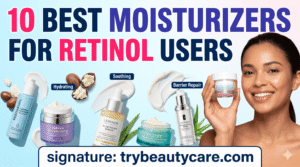
What Is the Retinol Sandwich Method?
The retinol sandwich method involves:
- Applying moisturizer
- Applying retinol
- Applying another moisturizer layer
Benefits include:
- Reduced irritation
- Better comfort
- Easier adjustment for beginners
Moisturizers for Retinol by Skin Type
Dry Skin
Look for:
- Ceramides
- Hyaluronic acid
- Rich creams
Oily Skin
Look for:
- Lightweight gels
- Non-comedogenic formulas
Sensitive Skin
Look for:
- Fragrance-free products
- Barrier-support ingredients
Combination Skin
Look for:
- Balanced hydration
- Lightweight creams
Common Mistakes When Using Retinol and Moisturizers
Many beginners make avoidable mistakes.
Using Too Much Retinol
More product does not necessarily improve results.
Skipping Moisturizer
Skipping moisturizer may increase dryness.
Ignoring Sunscreen
Retinol can increase sun sensitivity.
Daily sunscreen remains important.
Using Too Many Active Ingredients
Combining many strong ingredients may increase irritation.
Best Moisturizer Ingredients That Pair Well With Retinol
Finding the right moisturizer for retinol use is not only about hydration. The ideal formula should support the skin barrier while helping reduce irritation and maintain healthy skin.
Some ingredients are especially helpful when using retinol regularly.
Peptides
Peptides are small chains of amino acids that help support skin structure.
Benefits may include:
- Improved skin elasticity
- Smoother appearance
- Support for collagen production
- Better skin texture
Peptides are often included in anti-aging moisturizers.
Panthenol
Panthenol, also called provitamin B5, helps improve moisture retention.
Benefits include:
- Reduced irritation
- Softer skin texture
- Hydration support
- Skin barrier improvement
Centella Asiatica
Centella Asiatica is a botanical ingredient commonly used in skincare products.
Benefits include:
- Soothing effects
- Reduced redness
- Skin calming support
- Barrier repair assistance
Shea Butter
Shea butter provides rich hydration and helps reduce moisture loss.
Benefits include:
- Long-lasting moisture
- Improved softness
- Dry skin support
People with very dry skin often prefer richer moisturizers containing shea butter.
Morning Skincare Routine When Using Retinol
Retinol is commonly used during nighttime routines, but morning care is equally important.
A simple morning routine may include:
Step 1: Gentle Cleanser
Choose a mild cleanser that removes oil and impurities without stripping moisture.
Step 2: Hydrating Serum
Hydrating ingredients may include:
- Hyaluronic acid
- Glycerin
- Niacinamide
Step 3: Moisturizer
Apply a moisturizer suitable for your skin type.
Step 4: Sunscreen
Sun protection is extremely important while using retinol.
Daily sunscreen helps protect against:
- Sun damage
- Dark spots
- Increased sensitivity
- Premature aging
-
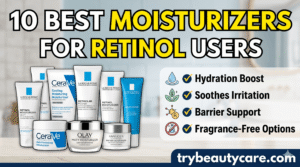
10 Best Moisturizers for Retinol Users
Night Routine for Retinol Users
Nighttime is usually when retinol products are applied.
Step 1: Cleanse Skin
Remove dirt, makeup, and oil gently.
Step 2: Dry the Skin
Wait a few minutes before applying retinol.
Step 3: Apply Retinol
Use a small amount.
Many people start with lower frequency use.
Step 4: Apply Moisturizer
Use a hydrating moisturizer to support the skin barrier.
How Long Does Retinol Purging Last?
Some individuals experience temporary breakouts after starting retinol.
Retinol purging may occur because increased skin cell turnover brings clogged material to the surface faster.
Common signs include:
- Small breakouts
- Dryness
- Peeling
- Mild irritation
Purging periods vary between individuals.
Signs You May Need a Better Moisturizer for Retinol
Certain symptoms may indicate insufficient hydration.
Examples include:
- Persistent dryness
- Skin tightness
- Excessive peeling
- Burning sensations
- Increased redness
- Flaky patches
Switching to a moisturizer with stronger barrier-support ingredients may help.
Common Myths About Moisturizers for Retinol
Myth 1: Oily Skin Does Not Need Moisturizer
Reality:
Even oily skin requires hydration.
Skipping moisturizer may sometimes increase oil production.
Myth 2: Thick Moisturizers Always Work Better
Reality:
The best moisturizer depends on skin type.
Lightweight formulas may work well for oily skin.
Myth 3: Moisturizers Reduce Retinol Results
Reality:
Moisturizers generally help improve comfort and consistency without removing retinol benefits.
Myth 4: More Retinol Produces Faster Results
Reality:
Using too much retinol may increase irritation rather than improve results.
Long-Term Benefits of Using Moisturizers With Retinol
People who consistently combine retinol with proper hydration often notice several benefits over time.
Possible improvements include:
- Better skin texture
- Improved hydration
- Reduced dryness
- Smoother skin appearance
- More comfortable retinol use
- Better routine consistency
Moisturizers for Retinol and Seasonal Skin Changes
Skin behavior often changes throughout the year. Weather conditions, humidity levels, and environmental exposure may affect how skin reacts to retinol.
Adjusting moisturizer choices according to the season can help maintain comfort and hydration.
Winter Skin Care With Retinol
Cold weather and indoor heating can increase moisture loss.
People may experience:
- Dry patches
- Tight skin
- Flaking
- Increased irritation
During winter, richer moisturizers may provide additional support.
Helpful ingredients include:
- Ceramides
- Shea butter
- Squalane
- Glycerin
Summer Skin Care With Retinol
Hot temperatures and humidity may increase oil production.
Lightweight moisturizers may feel more comfortable.
Suitable options may include:
- Gel moisturizers
- Oil-free formulas
- Lightweight lotions
- Water-based products
Daily sunscreen remains especially important.
Moisturizers for Retinol Beginners
People starting retinol often experience an adjustment period.
Beginner-friendly practices include:
Start Slowly
Many users begin with:
- One or two applications per week
- Gradually increasing frequency
Use Mild Products
Gentle skincare products may reduce irritation risks.
Examples include:
- Fragrance-free cleansers
- Hydrating moisturizers
- Simple ingredient formulas
Monitor Skin Reactions
Observe changes such as:
- Redness
- Peeling
- Dryness
- Sensitivity
Adjusting frequency may improve comfort.
Understanding Skin Barrier Health
The skin barrier functions as the outer protective layer of the skin.
Healthy skin barriers help:
- Prevent moisture loss
- Block environmental stressors
- Protect against irritation
- Maintain skin balance
Retinol users often focus on barrier support because damaged barriers can increase discomfort.
Signs of healthy skin may include:
- Smooth texture
- Balanced hydration
- Reduced sensitivity
- Comfortable skin feel
Daily Habits That Support Retinol Users
Skincare products are important, but daily habits also influence skin health.
Helpful practices may include:
Drink Adequate Water
Hydration supports overall body function and skin health.
Avoid Excessive Hot Water
Very hot water may contribute to dryness.
Warm water often feels gentler on the skin.
Sleep Adequately
Rest supports natural skin repair processes.
Maintain a Balanced Diet
Foods containing nutrients may contribute to overall skin health.
Examples include:
- Fruits
- Vegetables
- Healthy fats
- Protein sources
Signs That Your Retinol Routine Is Working
Visible improvements may take time.
Potential changes may include:
- Smoother skin appearance
- Improved texture
- Reduced appearance of fine lines
- More even-looking skin tone
- Better overall skin appearance
Results vary based on:
- Skin type
- Product strength
- Consistency
- Individual response
Frequently Asked Questions About Moisturizers for Retinol
Can I use moisturizer before retinol?
Yes. Many people use moisturizer before retinol to reduce irritation.
Should I use moisturizer after retinol?
Yes. Applying moisturizer after retinol helps maintain hydration.
Can oily skin use moisturizers with retinol?
Yes. Even oily skin benefits from hydration.
Do moisturizers reduce retinol effectiveness?
Generally, moisturizers do not eliminate retinol benefits.
How long does skin take to adjust to retinol?
Adjustment periods vary but often take several weeks.
read also: Best Shampoo for Hair Fall and Thin Hair 2026
Final Thoughts on Moisturizers for Retinol
Retinol remains one of the most effective skincare ingredients for improving texture, reducing acne, and addressing signs of aging. However, moisturizers play an important role in making retinol routines more comfortable and sustainable.
Choosing moisturizers with ingredients such as ceramides, hyaluronic acid, niacinamide, glycerin, and squalane can help reduce irritation and support the skin barrier.
Using the right moisturizer consistently may improve hydration, comfort, and long-term skincare results while allowing users to enjoy the benefits of retinol with fewer side effects.
3 thoughts on “10 Best Moisturizers for Retinol Users”